
Desserts
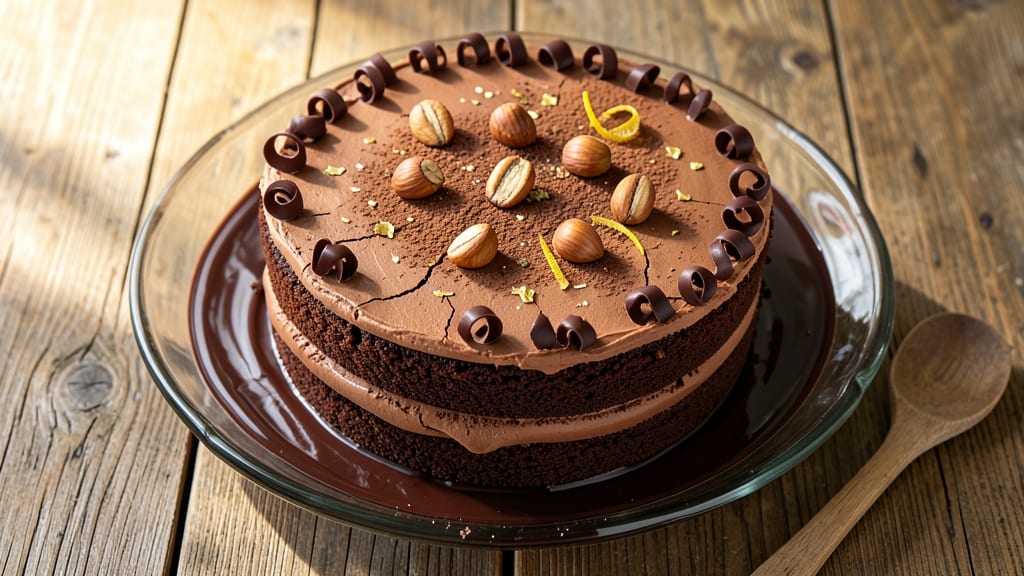
This Callebaut chocolate cake delivers Belgian fudgy swirls with a crack-free crust, thanks to precise techniques and premium chocolate. The secret lies in tempering Callebaut's rich cocoa butter content, ensuring smooth texture and deep flavor in every slice.
What sets this recipe apart is the balance between dense, moist layers and airy swirls—no dry crumbs or bitter aftertaste here.
The cake's success starts with proper mixing methods: creaming butter and sugar until light, then folding in melted Callebaut chocolate for a velvety batter. A water bath during baking prevents cracking, while the swirls are achieved with a simple knife technique before the cake sets.
The result? A professional-quality dessert that's surprisingly easy to recreate at home.
By the time it emerges from the oven, you'll have a golden-domed cake with fudgy chocolate pockets and a tender crumb. The Callebaut chocolate's high cocoa content delivers a complex, bittersweet profile that pairs perfectly with whipped cream or a dusting of powdered sugar.
This isn't just another chocolate cake—it's a restaurant-worthy masterpiece with Belgian roots.
For extra indulgence, consider adding a chocolate ganache between layers or topping with fresh berries. The recipe scales beautifully for gatherings, and leftovers stay moist for days when stored properly. Let's get baking—your taste buds will thank you.
Ingredients for callebaut chocolate cake
Belgian chocolate meets precise technique in this crack-free cake with velvety swirls.
| Ingredient | Amount | Notes |
|---|---|---|
| Callebaut Callebaut Chocolate (70% Cocoa) 🍫 | 8 oz | High-quality Belgian chocolate, chopped |
| Unsalted Butter 🧈 | 1 ½ cups | Room temperature, European preferred |
| Granulated Sugar 🍚 | 2 cups | Superfine for smoother texture |
| Large Eggs 🥚 | 4 whole | Room temperature, separated |
| All-Purpose Flour 🌾 | 1 ½ cups | Sifted, plus extra for dusting |
| Unsweetened Cocoa Powder 🍫 | ½ cup | Dutch-processed for smoothness |
| Baking Powder 🧂 | 1 tbsp | Aluminum-free preferred |
| Diamond Crystal Kosher Salt 🧂 | ½ tsp | Fine grain for even distribution |
| Vanilla Extract 🌿 | 2 tsp | Pure Madagascar bourbon |
| Whole Milk 🥛 | ¾ cup | Room temperature |
| Water 💧 | 1 cup | For water bath |
| Powdered Sugar 🍚 | ½ cup | For dusting |
The Callebaut chocolate is non-negotiable here—70% cocoa delivers that deep, complex Belgian flavor without bitterness. Ghirardelli or Valrhona work in a pinch, but Callebaut's tempered cocoa butter content is what creates those signature fudgy swirls. For the butter, European-style (like Plugrá or President) has higher fat content, yielding a richer crumb. If using American butter, make sure it's unsalted and at perfect room temperature—68-70°F—for proper creaming. The superfine sugar is worth the investment; it dissolves more evenly, preventing graininess in the final texture.
No superfine sugar? Pulse regular granulated sugar in a food processor for 30 seconds—it'll work in a pinch. For the cocoa powder, Dutch-processed (like Callebaut or Cacao Barry) is essential; natural cocoa will make your cake taste bitter. Eggs must be separated—room temperature yolks emulsify better, while slightly chilled whites hold their volume longer. The baking powder is crucial for lift; Aluminum-free (like Rumford) prevents metallic aftertaste. Substituting with baking soda? Add 1 tsp cream of tartar to stabilize it. For the water bath, use a 9x13-inch baking pan—any larger and the cake may overbake before setting.
This cake keeps beautifully—3 days at room temperature wrapped airtight, or 5 days refrigerated. For longer storage, slice and freeze portions between parchment for up to 3 months. The golden dome should be at room temperature before serving—30 minutes is ideal. Any leftover batter can be baked immediately in a 6-inch springform pan for individual portions. The chocolate ganache suggestion in the intro? Use 4 oz Callebaut plus 4 oz heavy cream—heat gently and let it cool to ribbon stage before pouring.
Why You'll Love This Recipe
- Here’s what sold me: that 70% cocoa doesn’t taste like a health lecture. It’s deep, velvety, and the eggs keep it from being too dense—like a hug in cake form, but with actual chocolate.
- I’ll be real: Callebaut chocolate isn’t cheap, but a single bar stretches into two cakes, and the butter-and-sugar base means no pricey add-ins. Leftovers? They disappear faster than I can say “second slice.”
Step-by-step instructions for Belgian fudgy swirls without cracking
Master the art of Belgian chocolate cake with this foolproof method that delivers rich, moist layers and perfect swirls.
Prepare the Chocolate Swirl Dough
In a medium mixing bowl, combine the 8 oz Callebaut Callebaut Chocolate (70% Cocoa), 1.5 cups Unsalted Butter, and 2 cups Granulated Sugar. Melt the chocolate and butter together over a double boiler or in 30-second bursts in the microwave, stirring between each interval until completely smooth. Let the mixture cool slightly to 100°F—it should be thick but still pourable.
Add the 4 whole Large Eggs, one at a time, whisking vigorously after each addition. Incorporate the 2 tsp Vanilla Extract and 0.5 tsp Diamond Crystal Kosher Salt, mixing until fully combined. Sift in the 1.5 cups All-Purpose Flour and 0.5 cup Unsweetened Cocoa Powder, folding gently with a spatula until just incorporated. This dough will be thick and fudgy—resist the urge to overmix, as it can develop gluten and toughen the texture.
Create the Swirl Pattern in the Pan
Preheat your oven to 350°F and grease a 9-inch round cake pan with butter, then dust lightly with flour. Spread half of the chocolate dough evenly into the bottom of the pan, using an offset spatula to create a thin, even layer. Drop spoonfuls of the remaining dough onto the base layer, spacing them 2 inches apart. Use the back of the spoon to gently press the dollops downward, creating a swirl pattern.
Return the pan to the counter and quickly swirl the dollops with a knife or skewer, creating a marbled effect. This step ensures the classic Belgian swirl while preventing cracking during baking. The dough should fill the pan completely—press down gently to eliminate air pockets, which can cause uneven rising.
Bake the Cake in a Water Bath
Place the prepared pan on a baking sheet and pour the 1 cup Water into the bottom of the sheet, creating a shallow bath. This technique, known as baking au bain-marie, ensures even heat distribution and prevents the cake from drying out. Bake for 40-45 minutes, or until a toothpick inserted into the center comes out clean with a few moist crumbs clinging to it.
The cake is done when the edges pull away slightly from the pan and the top springs back when gently pressed. Overbaking is the enemy here—it leads to a dry, crumbly texture. If the top browns too quickly, tent the pan loosely with aluminum foil to prevent overcoloring while allowing steam to escape.
Cool and Finish with Powdered Sugar
Remove the cake from the oven and let it cool in the pan for 10 minutes. Then, invert the cake onto a wire rack and peel off the pan. While still warm, dust the top generously with the 0.5 cup Powdered Sugar using a fine-mesh sieve. This step adds a delicate, snowy finish and balances the rich chocolate flavor.
Allow the cake to cool completely before slicing—this ensures clean cuts and prevents the swirls from smudging. Serve at room temperature for the best texture and flavor. The result should be a moist, fudgy cake with distinct chocolate swirls that hold their shape, delivering a luxurious eating experience with every bite.
Pro Tips For Making Callebaut Chocolate Cake
- Melt Chocolate Slowly: I learned this the hard way—dumping chopped Callebaut 70% cocoa into hot butter on high heat makes it seize. Instead, melt the butter first, then reduce to a bare simmer and add the chocolate in small batches, stirring constantly until it’s fully incorporated. The goal is a smooth, glossy ganache, not a grainy mess.
- Whisk Eggs Room-Temp: Cold eggs from the fridge won’t emulsify properly, and you’ll end up with a cake that’s dense or cracked. Pop those eggs in warm water for 5 minutes before cracking them into a bowl—this ensures they blend smoothly with the butter and sugar. Trust me, your crumb will thank you.
- Avoid Overmixing the Batter: Once you add the flour, mix just until combined—about 10 strokes with a spatula. Overmixing develops gluten, which turns your rich chocolate cake into a tough, dry brick. Fold gently, like you’re tucking in a baby, and stop when there’s no more flour streaks.
- Bake Until Slightly Under: The cake will pull away from the edges and look set, but the center should still have a tiny wobble when you jiggle the pan. If you wait for a perfectly flat, firm top, you’ll dry out the cake. Pull it out early, tent with foil, and let it cool completely—it’ll firm up as it rests.
Serving suggestions for this dish
Classic Presentation
Serve slices on elegant gold-rimmed plates with a dusting of powdered sugar and a dollop of whipped cream for that quintessential Belgian café feel. I like to garnish with a single fresh raspberry or dark chocolate shard to add color contrast.
For extra flair, arrange slices on a slate board with a side of warm chocolate sauce for dipping. 💛
Ganache Glaze
Heat 4 oz Callebaut chocolate with 4 oz heavy cream until smooth, then cool to 70°F for a glossy drizzle. Pour over the cake while still warm, letting it cascade down the sides for a restaurant-worthy finish.
For a mirror glaze, add 1 tsp corn syrup to the ganache and chill before pouring. This technique creates that signature glossy sheen you see in patisseries.
Fruit Pairings
Bright, acidic fruits cut through the richness beautifully. Strawberries or blackberries add a refreshing contrast, while orange segments bring a citrusy brightness. I also love pairing this cake with chilled white chocolate-dipped strawberries—the coolness of the white chocolate balances the warm, fudgy cake.
For a tropical twist, try mango slices or passion fruit purée drizzled on top.
Coffee & Tea Pairings
A strong espresso or Belgian-style coffee (like a cappuccino) enhances the chocolate’s depth, while chai tea adds a spiced warmth. For a lighter option, Earl Grey tea with its bergamot notes creates a sophisticated pairing.
Avoid overly sweet beverages—they’ll overpower the cake’s natural bittersweet flavor. A small demitasse cup of coffee served alongside makes for a perfect afternoon treat.
Make-Ahead Serving
This cake keeps exceptionally well for 3 days at room temperature or 5 days refrigerated. For special occasions, slice and wrap individual portions in parchment paper, then store in an airtight container. Reheat slices for 10-15 seconds in the microwave to restore moisture.
The swirls hold their shape beautifully, making it ideal for gift boxes or office potlucks. Just bring to room temperature before serving for the best texture. ✨
Nutrition facts
Frequently asked questions
Why does this recipe use a water bath for baking?
The water bath (bain-marie) creates even heat distribution, preventing cracks and ensuring a moist, fudgy texture. The Belgian chocolate's high cocoa butter content needs gentle heat to develop properly—this method mimics professional patisserie techniques while keeping the cake tender. Skip it, and you risk dryness or uneven baking.
Can I substitute Callebaut chocolate with regular baking chocolate?
Not ideal! Callebaut's 70% cocoa delivers that signature Belgian depth without bitterness. Regular baking chocolate (like Hershey's) contains leavening agents that alter texture—use Valrhona or Ghirardelli 70% cocoa instead if needed. The tempered cocoa butter in Callebaut creates those signature swirls, so avoid milk chocolate substitutes.
How do I fix a cracked top on my chocolate cake?
Cracks usually mean overbaking or uneven heat. For future attempts: Bake 2-3 minutes less, remove immediately when toothpick comes out clean, and tent with foil if browning too fast. For existing cracks, spread a thin layer of chocolate ganache over the top—it'll disguise imperfections while adding flavor!
What's the secret to perfect swirls without smudging?
Work quickly! After dropping dough dollops, swirl with a knife while the pan is still on the counter. Press gently to eliminate air pockets, then bake immediately. Cooling too long before swirling causes the chocolate to set and lose its marbled effect. For extra definition, chill the cake 15 minutes after baking before slicing.
Can I make this cake gluten-free?
Yes, but texture may differ. Replace flour with a 1:1 gluten-free baking blend (like Bob's Red Mill) plus 1 tsp xanthan gum. For best results, add 1 tbsp cornstarch to the dry ingredients.