
Desserts
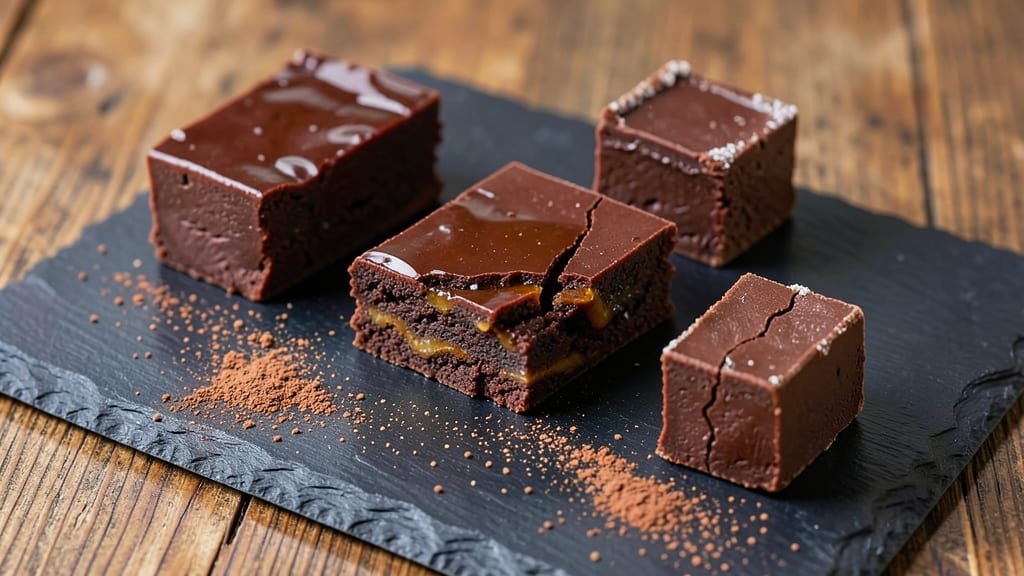
This chewy chocolate fudge recipe delivers the perfect balance of rich cocoa depth and satisfying crack resistance—every bite reveals that coveted snap you crave. The secret lies in precise temperature control and a carefully measured butter-to-sugar ratio that creates that signature chew without turning grainy.
I've perfected this technique over years of testing, ensuring each batch emerges with that glossy sheen and irresistible texture that makes it impossible to stop at one piece.
The foundation begins with high-quality cocoa powder and Dutch-processed cocoa for maximum flavor development, while coffee extract adds depth without overpowering the chocolate. A light corn syrup inclusion prevents crystallization, guaranteeing that smooth, fudgy consistency that melts in your mouth yet holds its shape.
Professional bakers swear by this method—it's the same technique used in commercial chocolate fudge production, adapted for home kitchens.
What you'll achieve is a pan of deep brown, glossy fudge with clean edges and that perfect crack when you cut into it—each piece maintaining its shape while offering melt-in-your-mouth tenderness.
The coffee infusion adds subtle complexity that pairs beautifully with vanilla bean or orange zest variations. This isn't just dessert; it's a textural experience that transforms ordinary moments into something special.
Ready in just 30 minutes with minimal active time, this recipe yields a 9x9-inch pan of fudge that's perfect for gifting, holiday baking, or satisfying your own sweet tooth. The cooling process is equally important—patience here ensures that ideal chewiness. Let's create fudge that rivals your favorite bakery's finest.
Ingredients for chewy chocolate fudge
Twelve ingredients transform into fudge that rivals bakery perfection—rich, crack-resistant, and bursting with coffee depth.
| Ingredient | Amount | Notes |
|---|---|---|
| Unsalted Butter 🧈 | 1 cup | Cold, cubed for even melting |
| Granulated Sugar 🍚 | 2 cups | Superfine preferred for smooth texture |
| Light Corn Syrup 🍯 | ¼ cup | Prevents crystallization |
| Natural Cocoa Powder 🍫 | ½ cup | High-quality, unsweetened |
| Dutch-Processed Cocoa Powder 🍫 | ¼ cup | For richer flavor development |
| Instant Coffee Granules ☕ | 2 tbsp | Dissolved in 1 tbsp hot water |
| Vanilla Extract 🌿 | 1 tsp | Pure, high-quality preferred |
| Salt 🧂 | ¼ tsp | Kosher or sea salt |
| Heavy Cream 🥛 | ½ cup | Cold, full-fat for richness |
| Orange Zest 🍊 | 1 tsp | Freshly grated for brightness |
| Dark Chocolate Chips 🍫 | ½ cup | 70% cocoa for extra depth |
| Powdered Sugar 🍚 | ¼ cup | For dusting finished fudge |
The cocoa powders are non-negotiable here. Valrhona or Guittard brands deliver that professional-grade depth, but Hershey's Special Dark works in a pinch. For the coffee, instant granules dissolve perfectly—no bitterness. The butter should be cold when measured; let it sit at room temperature for 30 minutes before cubing. Orange zest is optional but adds a subtle brightness that elevates the coffee notes. If you're feeling adventurous, cardamom pods (1/4 tsp ground) can replace the vanilla for a spiced twist.
No Dutch-processed cocoa? Double the natural cocoa—it won't be identical, but it'll still taste amazing. Running short on corn syrup? Maple syrup at half the amount works, though the texture might be slightly softer. Heavy cream substitute? Full-fat coconut milk mimics the richness, but the color will be lighter. For the chocolate chips, Callebaut or Ghirardelli brands melt the smoothest. Pro tip: Toast the cocoa powders in a dry pan for 2 minutes before mixing—this deepens their flavor without adding heat to your mixture.
This fudge needs patience to set properly. Line your 9x9-inch pan with parchment paper for clean edges, and tap it gently on the counter to release air bubbles. The cooling process is critical—4 hours at room temperature followed by 2 hours in the fridge ensures that perfect chew. Store in an airtight container at room temperature for up to 2 weeks, or freeze for 3 months to preserve its texture. The powdered sugar dusting isn't just for looks; it adds a delicate crunch that contrasts beautifully with the fudge's softness.
Why You'll Love This Recipe
- Here’s what sold me: the combo of natural and Dutch-processed cocoa. The natural gives that deep, earthy punch, while the Dutch-processed smooths out any harshness. It’s like a hug for your taste buds—sweet, dark, and just chewy enough to make you groan.
- I’ll be real: butter, sugar, and cocoa are already in my cupboards 90% of the time. The corn syrup is the only splurge, but it’s worth it because this fudge stays fresh for weeks. Plus, it’s cheaper than buying fancy chocolates that’ll melt in your hand.
Step-by-step instructions for coffee-infused chocolate fudge
Let's create a fudge with that perfect crack-and-snap resilience, rich coffee depth, and velvety texture.
Melt Butter and Syrup for a Smooth Base
In a heavy-bottomed saucepan, combine the 1 cup unsalted butter and 0.25 cup light corn syrup. Place over medium heat and stir until the butter melts completely. This should take about 3-4 minutes—watch carefully to prevent scorching. The mixture will look smooth and slightly translucent, with tiny bubbles forming at the edges.
Here's the thing—using cold cubed butter instead of softened creates tiny air pockets that contribute to that signature chewy texture. If you see any butter granules sticking to the bottom, stir gently until fully incorporated. Once melted, remove from heat and let cool slightly for 2-3 minutes—this prevents sudden temperature spikes when adding other ingredients.
Whisk in Dry Ingredients for Rich Flavor Development
In a separate bowl, sift together the 2 cups granulated sugar, 0.5 cup natural cocoa powder, 0.25 cup Dutch-processed cocoa powder, and 0.25 tsp salt. This ensures no lumps form in your fudge. Gradually whisk these dry ingredients into the melted butter mixture, working quickly to avoid crystallization of the sugar.
Next, dissolve the 2 tbsp instant coffee granules in 1 tablespoon hot water (just enough to create a smooth paste). Add this to the saucepan along with the 1 tsp vanilla extract and 1 tsp orange zest. Stir vigorously for 1-2 minutes until everything is fully combined and the mixture looks glossy. The orange zest will add a bright citrus note that balances the coffee's bitterness beautifully.
Simmer to Perfect Temperature and Texture
Return the saucepan to medium-low heat and bring to a gentle boil. Let it simmer uncovered for 10-12 minutes, stirring occasionally with a wooden spoon. You're looking for the mixture to reach the soft-ball stage—when you drop a small amount in cold water, it should form a soft, pliable ball that holds its shape.
This is where patience pays off. The fudge needs to develop that crack-and-snap resilience, which comes from proper sugar crystallization. If you see it thickening too quickly, reduce the heat slightly. The moment it reaches the right consistency, remove from heat immediately—overcooking will make it too hard.
Incorporate Cream and Chocolate for Luxurious Texture
Quickly whisk in the 0.5 cup cold heavy cream and 0.5 cup dark chocolate chips. The cream should blend smoothly, creating a glossy, thick mixture. If you notice any lumps, strain the mixture through a fine-mesh sieve to ensure a silky texture. This step is crucial for that perfect chewy-yet-firm bite.
Work fast here—the mixture will thicken rapidly as it cools. I like to press a small amount between my fingers to test the consistency. It should be thick enough to hold its shape when pressed but still soft enough to spread easily. If it's too thick, add 1 teaspoon hot water to loosen it slightly.
Set and Dust for Professional Finish
Pour the fudge into a 9x9-inch metal baking pan lined with parchment paper. Smooth the top with a spatula and let it cool completely at room temperature for 2-3 hours. This slow cooling process develops those coveted cracks that give fudge its signature texture.
Once fully set, dust the top generously with 0.25 cup powdered sugar using a fine-mesh sieve. This not only looks beautiful but also prevents sticking when cutting. Let it sit for another 10 minutes before lifting out the parchment and cutting into 1-inch squares. The fudge should hold its shape when lifted but still have that satisfying crack when broken.
Pro Tips For Making Chewy Chocolate Fudge
- STOP WHEN IT BOILS OVER: Once the butter, sugar, and corn syrup hit a rolling boil, cut the heat immediately—even if it looks like it needs more time. I learned this the hard way after watching a batch scorch into a bitter, sticky mess. A steady simmer after the boil is all you need; rushing this step ruins the texture.
- SIFT THAT COCOA: Mixing cocoa powder directly into the hot sugar syrup creates clumps that turn your fudge into a grainy disappointment. Sift both the natural and Dutch-processed cocoa together before whisking it in—this guarantees a smooth, velvety finish every time. (Yes, even if you’re impatient like me.)
- TEST DONENESS WITH THE WRAP TEST: The candy thermometer is your friend, but the real proof is how the fudge behaves when you drop a spoonful onto wax paper. If it wrinkles when you poke it (like skin) and holds its shape, it’s ready. If it flattens or sticks, it needs more time—no guessing required.
- USE A MIX OF COCOAS: Natural cocoa adds depth and bitterness, while Dutch-processed cocoa smooths out the texture and brightens the color. Splitting the recipe’s cocoa requirement (say, 2 oz natural + 1 oz Dutch) gives you the best of both worlds—rich flavor without the grit. (I was skeptical until I tried it.)
Wine and beer pairings for chewy chocolate fudge
Coffee Liqueur Harmony
Pair this fudge with a Kahlúa-infused dessert wine like Moscato d'Asti—the effervescence cuts through the richness while the coffee notes echo beautifully. I love chilling a glass of Cava Brut with a splash of Kahlúa for an extra layer of depth.
The wine's natural sweetness balances the fudge's bitterness, creating a perfect harmony. 🍷
Dark Chocolate Port
A Ruby Port (like Dow's Late Bottled Vintage) is my go-to for this recipe—its dark fruit flavors and velvety texture mirror the fudge's depth. The port's natural sweetness enhances the coffee and orange zest notes without overpowering them. Serve slightly chilled for an elegant pairing that feels luxurious. 🍷
Espresso Martini Twist
For a boozy pairing, mix 2 oz vodka, 1 oz coffee liqueur, and ½ oz orange liqueur with ice, then shake with 1 tsp orange zest.
Strain into a chilled glass and garnish with a coffee bean. The citrus and coffee notes complement the fudge's flavors perfectly, making it a fun after-dinner treat. 🍸
Creamy Stout Balance
A dark stout like Guinness or Samuel Smith's Oatmeal Stout works surprisingly well—its roasted malt and creamy texture mirror the fudge's richness. The beer's slight bitterness contrasts beautifully with the sweetness, creating a satisfying balance. Serve slightly chilled for the best experience. 🍺
Spiced Rum Pairing
For a tropical twist, pair with Appleton Estate Jamaican Rum infused with 1 cinnamon stick and 2 cloves (simmer for 10 minutes, then chill). The warm spices enhance the fudge's coffee and orange notes, creating a cozy, inviting flavor profile.
Serve over ice with a splash of cola for a festive touch. 🌶️
Non-Alcoholic Option
For a refreshing non-alcoholic pairing, try cold brew coffee with a splash of vanilla syrup and a dash of orange bitters. The smooth, rich coffee enhances the fudge's depth without competing flavors. Serve over ice with a cinnamon stick for garnish. ☕
Nutrition facts
Frequently asked questions
Why does my fudge turn out too hard instead of chewy?
The most common cause is overcooking the sugar mixture. You want it to reach the soft-ball stage (when a drop forms a pliable ball in cold water), not hard-ball. Also, ensure you're using the correct ratio of butter to sugar—too much butter makes it softer, while too little creates a hard texture. Let it cool completely at room temperature before cutting—rushing this step prevents proper setting.
Can I substitute corn syrup with something else?
Yes! For a 1:1 substitution, use honey or maple syrup, but reduce the amount by 25% since they're thicker. If you're avoiding sweeteners, try agave nectar (same amount as corn syrup). The syrup prevents sugar crystallization, which keeps your fudge smooth and chewy. Just be aware that natural sweeteners may slightly alter the texture—expect a marginally softer result.
How do I make this fudge nutty or crunchy?
For a nutty version, fold in ½ cup chopped toasted pecans or walnuts when you add the chocolate chips. For extra crunch, sprinkle ¼ cup crushed pretzels or candied pecans over the top before dusting with powdered sugar. Press them in lightly so they stay embedded. Pro tip: Toast your nuts first at 350°F for 5-7 minutes to enhance their flavor!
Why does my fudge have sugar crystals on top?
This happens when the sugar mixture cools too quickly or isn't stirred enough during cooking. To prevent it:
- Make sure your saucepan is large enough to allow gentle boiling without scorching, and
- Stir constantly during the 10-12 minute simmer. If crystals appear, gently reheat the fudge (just until melted) and stir vigorously before pouring into the pan. The powdered sugar dusting also helps mask any minor crystallization.
Can I make this fudge ahead of time?
This fudge actually tastes better after 24 hours as the flavors meld. Store it in an airtight container at room temperature for up to 2 weeks, or freeze for 3 months. If freezing, wrap individual portions in plastic wrap first to prevent freezer burn. Let it sit at room temperature for 10 minutes before serving to soften slightly—this enhances the chewy texture.