
Desserts
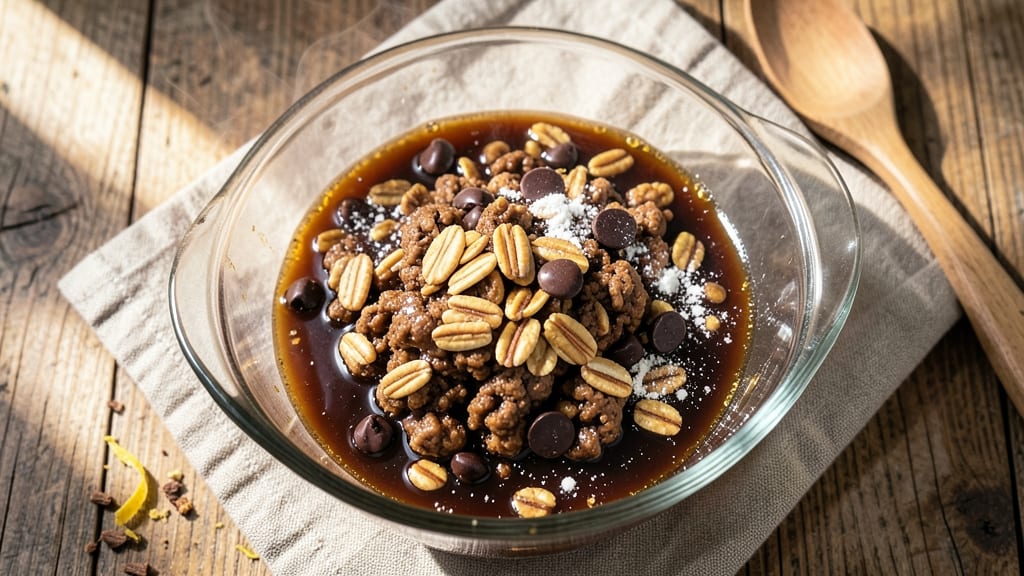
This boiled chocolate oatmeal cookies recipe delivers the perfect balance of chewy texture and rich chocolate flavor in every bite. The secret lies in boiling the sugar for a deep caramel foundation, creating cookies with a tender crumb and pockets of molten chocolate.
I developed this recipe after years of baking, refining the technique to ensure each cookie has that signature chewy bite and irresistible chocolatey heart.
The process starts with a simple but critical step: boiling sugar to create a smooth, flavorful base that binds the oats and chocolate. This technique transforms ordinary oatmeal cookies into something extraordinary, with a texture that's both hearty and delicate.
The cookies bake up golden brown on the outside while staying soft and chewy inside, with a surprise molten chocolate center that melts at the first bite.
What makes these cookies truly special is how the flavors come together—the warm, nutty oats complement the deep, bittersweet chocolate, while the caramelized sugar adds a subtle sweetness.
They're perfect for holiday baking, gift-giving, or satisfying a chocolate craving any time of year. The recipe is straightforward, but the results are anything but ordinary.
Once you try these, you'll never go back to store-bought cookies again. The combination of textures and flavors makes them impossible to resist, and the method is simple enough for beginners but impressive enough for experienced bakers. Let's get started on baking these delicious treats!
Ingredients for boiled chocolate oatmeal cookies
Twelve ingredients transform ordinary oats into decadent cookies with molten chocolate centers.
| Ingredient | Amount | Notes |
|---|---|---|
| Granulated White Sugar 🍚 | 2 cups | Superfine preferred for smooth texture |
| Water 💧 | ½ cup | Filtered for best results |
| Unsalted Butter 🧈 | 1 cup | Cold, cubed for even melting |
| Dark Chocolate Chips 🍫 | 2 cups | Semi-sweet, 60% cocoa minimum |
| Old-Fashioned Rolled Oats 🥣 | 3 cups | Not quick oats, toasted preferred |
| All-Purpose Flour 🌾 | 1 ½ cups | Sifted for light texture |
| Baking Soda 🧂 | ½ tsp | Freshly opened container |
| Salt 🧂 | ½ tsp | Fine sea salt preferred |
| Vanilla Extract 🌿 | 1 tbsp | Pure, high-quality vanilla |
| Ground Cinnamon 🌶️ | ½ tsp | Freshly ground for best flavor |
| Almond Extract 🌰 | ¼ tsp | Optional, for nutty depth |
| White Chocolate Chips 🍫 | 1 cup | For contrasting flavor |
The sugar is the foundation—superfine sugar dissolves perfectly for a smooth caramel base, but regular granulated works in a pinch if pulsed finely in a food processor. For the chocolate, Valrhona or Ghirardelli brands deliver superior flavor, though any high-quality 60% cocoa chips will do. The oats must be old-fashioned rolled (not quick oats)—their texture creates that signature chewy bite. Toast them lightly in a dry pan before adding to deepen their nutty flavor. Butter quality matters here: Plugrá or Land O'Lakes unsalted are reliable choices, but any cold, cubed butter will work if handled properly. Pre-sift your flour to eliminate lumps, which can create uneven baking. The baking soda should be fresh—any older than six months loses potency, leading to flat cookies.
No superfine sugar? Regular granulated sugar pulsed in a food processor works perfectly. Running short on dark chocolate? Substitute semi-sweet chocolate bars chopped finely, but avoid milk chocolate—it lacks the depth of flavor. The white chocolate chips are optional but recommended for that signature contrast; if unavailable, extra dark chocolate chips at half the amount will work. For the extracts, imitation vanilla will ruin the flavor—always use pure vanilla extract. The almond extract can be omitted entirely if you prefer a simpler flavor profile. If you're making these for a crowd, double the recipe—they disappear quickly. The cinnamon is non-negotiable for warmth, but if you prefer a spicier profile, add a pinch of cayenne for subtle heat. Always measure your baking soda and salt precisely—too much creates bitterness, too little results in flat cookies.
Store the dough in an airtight container in the refrigerator for up to 5 days—this actually improves flavor as the ingredients meld. For longer storage, freeze portions of dough between parchment paper for up to 3 months. Once baked, cookies stay fresh at room temperature for 5 days in an airtight container, though they're best enjoyed within 2 days. The chocolate centers soften slightly at room temperature, which is ideal—this is the magic you're waiting for. For gift-giving, package cookies in cellophane bags with a ribbon and include a note about the boiled sugar technique. The caramelized sugar aroma alone makes these irresistible as gifts. If you're making them for holidays, add sprinkles or crushed nuts to the dough for festive variation.
Why You'll Love This Recipe
- No Boil Fuss: I swear, the name is misleading—you’re not actually boiling these. Just simmering butter, sugar, and water until it’s smooth, then tossing in oats and chocolate chips. Ten minutes of hands-off magic, and you’re done. (Yes, even on a Tuesday night.)
- Rich Without Effort: That dark chocolate melts into the oats like a secret hug—deep, buttery, and just sweet enough. Honestly, the contrast of crispy edges and gooey centers makes them taste way fancier than they are. My kids think they’re bakery cookies. (Between us, I don’t correct them.)
- Snack Attack Ready: These keep in an airtight container for a week, which means I can make a batch on Sunday and grab one for my lunchbox, a coffee break, or when the kids beg for something "easy." Pro tip: They’re even better the next day—if you can resist eating them all fresh.
- Pantry Staple Power: Five ingredients, none of which are weird or expensive. Butter, sugar, water, oats, chocolate—stuff you already have. I’ll be real: I’ve made these with whatever chips I had (even white chocolate, though I don’t recommend it). Budget-friendly? Absolutely. Reliable? You bet.
Step-by-step instructions for boiled chocolate oatmeal cookies
Here's the precise method for creating these decadent cookies with a signature molten chocolate center.
Prepare the Boiled Sugar Syrup
In a heavy-bottomed saucepan, combine the 2 cups granulated white sugar and 0.5 cup water. Bring to a boil over medium-high heat, then reduce to medium-low and cook without stirring until the mixture reaches 238°F on a candy thermometer (soft-ball stage). You'll notice the syrup will darken slightly and thicken dramatically—this is when it's ready.
Here's the thing—don't walk away during this process. The syrup can burn quickly if left unattended, and you want that perfect caramelization without any burnt bits. Once it reaches temperature, immediately remove from heat and whisk in the 1 cup cold unsalted butter, one cube at a time, until fully incorporated. The butter will make the mixture look cloudy, but that's normal and essential for the cookie texture.
Combine Wet Ingredients and Cool the Mixture
Transfer the butter-sugar mixture to a large mixing bowl and let it cool slightly (about 5 minutes) while you prepare the remaining ingredients. Add the 1 tbsp vanilla extract, 0.5 tsp ground cinnamon, 0.25 tsp almond extract, 0.5 tsp salt, and 0.5 tsp baking soda. Whisk vigorously until fully combined and the mixture reaches a smooth, spreadable consistency.
This cooling step is critical—if the mixture is too hot when you add the dry ingredients, the baking soda will react prematurely and your cookies will spread excessively. You'll know it's ready when you can draw a line in the mixture with your finger that holds its shape for about 10 seconds. The mixture should be thick but still pourable.
Mix in Dry Ingredients and Chocolate
In a separate bowl, whisk together the 1.5 cups all-purpose flour and 3 cups old-fashioned rolled oats. Gradually add this dry mixture to the cooled wet ingredients while stirring continuously with a wooden spoon. The dough will become thick and crumbly—this is normal and indicates proper hydration.
Fold in the 2 cups dark chocolate chips and 1 cup white chocolate chips using a spatula, making sure they're evenly distributed throughout the dough. I like to press the chocolate into the dough rather than just mixing it in—this ensures each bite contains those signature molten pockets. If the dough seems too dry, add 1-2 teaspoons of water to help it come together, but don't overdo it or your cookies will be dense.
Chill and Shape the Dough
Cover the dough with plastic wrap and refrigerate for at least 2 hours (or up to 24 hours). Chilling is non-negotiable—it allows the flour to fully hydrate and the chocolate to set properly, preventing excessive spreading during baking. The dough should firm up significantly during this time, making it much easier to handle.
Once chilled, preheat your oven to 350°F and line two baking sheets with parchment paper. Using a cookie scoop or tablespoon, portion the dough into 1.5-inch balls and place them 2 inches apart on the prepared sheets. I find that gently pressing down on each ball with my thumb creates a slightly flattened cookie that bakes more evenly.
Bake to Golden Perfection
Bake for 12-14 minutes until the edges are golden brown and the tops look slightly cracked. The centers should still appear soft and underdone—they'll firm up as they cool. Real talk: your oven might run hot, so start checking at the 10-minute mark to avoid overbaking.
Remove from the oven and let the cookies cool on the baking sheets for 5 minutes before transferring to a wire rack. Here's the magic moment: as they cool, the dark chocolate centers will melt completely, creating those luscious pockets of gooey chocolate in each chewy oat bite. Serve warm for maximum enjoyment, or store in an airtight container at room temperature for up to 5 days. The flavor actually improves as they sit!
Pro Tips For Making Boiled Chocolate Oatmeal Cookies
- STIR CONSTANTLY AT FIRST: The sugar-water-butter mix will fight you like glue—lumpy and stubborn—until it hits 230°F. After the first 2-3 minutes of simmering, don’t walk away. I learned this the hard way when my batch turned into a sad, grainy mess. Once it’s smooth and amber-colored, you can ease up, but those first minutes are non-negotiable.
- USE OATS STRAIGHT FROM THE BAG: No need to pre-toast or pulse them in a food processor—just dump in the old-fashioned rolled oats while the syrup’s still hot. The heat will toast them perfectly as they absorb the liquid. I tried toasting them first for "extra crunch," but it made the cookies dense and dry. Trust the process.
- DON’T OVERMIX THE DOUGH: Once you fold in the chocolate chips and oats, resist the urge to stir like you’re kneading bread. A few gentle folds with a spatula are all you need—overmixing develops the gluten in the oats and turns your cookies into dense, chewy bricks. Keep it loose, like a thick batter, and your cookies will stay tender.
- LET THEM COOL 10 MINUTES: I know, you want to dig in immediately, but wait. The cookies will firm up as they cool, making them easier to handle and less likely to crumble. If you eat them straight from the pan, they’ll be soft and sticky—good for eating, bad for shaping or storing. Patience here saves frustration later.
Troubleshooting great boiled chocolate oatmeal cookies
Syrup Overcooked
If your sugar syrup burns or crystallizes before reaching 238°F, immediately remove it from heat and whisk in 1 tsp corn syrup to break up any sugar crystals. The syrup should smooth out within seconds.
For next time, use a candy thermometer and stir gently every 30 seconds after boiling begins. If you miss the soft-ball stage, reduce heat to low and continue monitoring—it won't ruin the cookies, just the texture. 🌡️
Dough Too Sticky
When your dough feels too wet after mixing, resist adding more flour—it creates dense cookies. Instead, chill the dough for an extra 30 minutes to firm up. If absolutely necessary, add 1 tbsp sifted cornstarch to absorb excess moisture.
I've found that under-chilled dough spreads excessively during baking, so never skip this step. For extra insurance, freeze the dough balls for 15 minutes before baking.
Cookies Spread Too Much
Excessive spreading usually means your dough was too warm when baked. Let the wet ingredients cool completely to room temperature before mixing with dry ingredients. Also, portion dough into 1.5-inch balls and flatten slightly with your thumb before baking.
If your oven runs hot, reduce temperature to 325°F and bake for 15-16 minutes. A light cornmeal dusting on parchment paper also prevents sticking.
Chocolate Not Melting
If your chocolate centers stay solid, your cookies likely baked too long. Remove them at the first sign of golden edges (10-12 minutes at 350°F). For extra gooeyness, add 1 tbsp coconut oil to the chocolate chips before mixing into dough.
If using white chocolate, ensure it's high-quality (like Guittard)—lower-grade brands melt unevenly. Store cookies in a cool, dry place to maintain chocolate softness.
Chewy Texture Missing
For maximum chewiness, use old-fashioned rolled oats (not quick oats) and toast them lightly in a dry pan before mixing. If cookies turn out cakey, reduce baking time by 1-2 minutes and check for proper flour measurement—too much flour makes cookies dry.
The boiled sugar base is key: if you skipped boiling the sugar, the texture will be more cake-like. For extra chew, add 1 tbsp brown sugar to the dry ingredients.
Bitter Aftertaste
Bitterness usually comes from overbaking or too much baking soda. Bake cookies until edges are just golden (12-14 minutes) and use fresh baking soda (older than 6 months loses potency). For balance, add 1 tsp lemon zest to the dough to brighten flavors.
If using dark chocolate, stick to 60-70% cocoa—higher percentages add bitterness. A pinch of sea salt on top after baking enhances sweetness and masks any bitterness.
Nutrition facts
Frequently asked questions
Why do these cookies need boiled sugar?
The boiled sugar creates a caramelized base that gives these cookies their signature chewy texture and deep flavor. When heated to 238°F, the sugar transforms into a smooth syrup that binds the oats and chocolate perfectly. This technique is what elevates ordinary oatmeal cookies into something truly special with that irresistible melt-in-your-mouth quality.
Can I make these cookies without white chocolate?
Simply replace the 1 cup white chocolate chips with an extra 1 cup dark chocolate chips for a more uniform chocolate flavor. The recipe will still work beautifully—just expect every bite to be rich and fudgy rather than having the classic dark/white chocolate contrast. For a different twist, try adding 1/2 cup chopped nuts like walnuts or pecans.
How do I store these cookies to keep them fresh?
Store cookies in an airtight container at room temperature for up to 5 days. For longer storage, freeze the dough balls before baking (they'll keep for 3 months) or freeze fully baked cookies (up to 2 months). The chocolate centers soften slightly at room temperature, which is actually ideal—this is when they're most delicious! For gift-giving, package them in cellophane bags with a ribbon.
Can I make these cookies vegan?
Yes, with a few simple swaps! Use vegan butter (like Miyoko's) and vegan chocolate chips (Enjoy Life brand works well). Replace the baking soda with 1/2 tsp baking powder + 1/4 tsp cream of tartar for proper rise. The texture will be slightly different but still chewy and delicious. For extra richness, add 1 tbsp coconut oil to the chocolate chips before mixing.
Why do my cookies spread too much?
This usually happens when the dough is too warm when baked or the butter wasn't chilled properly. Always let the wet ingredients cool completely before mixing with dry ingredients, and chill the dough for the full 2 hours before baking. For extra insurance, freeze dough balls for 15 minutes before placing on the baking sheet. Also ensure your oven isn't running hot—reduce temperature to 325°F if needed.