
Desserts
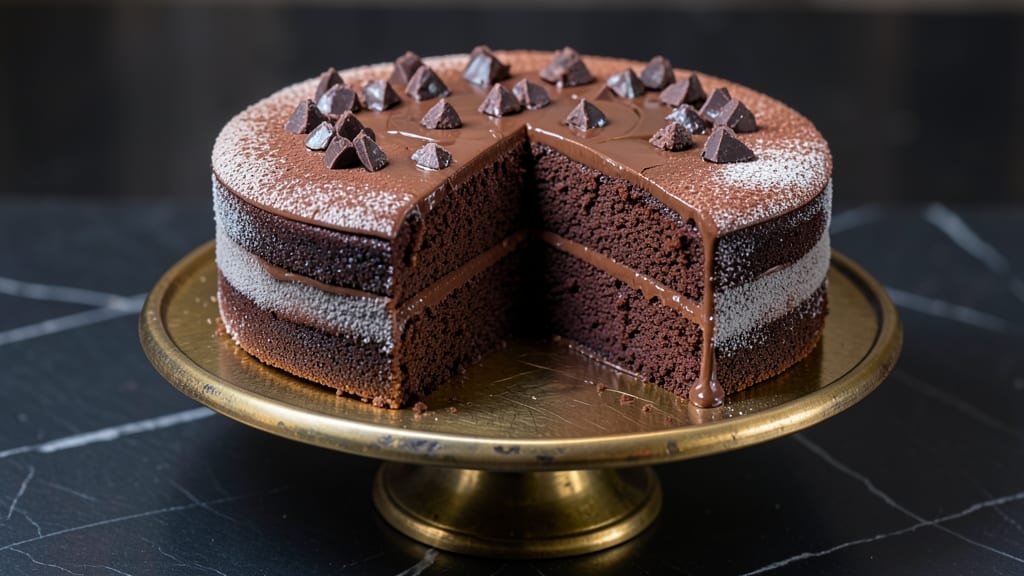
The secret recipe for this Belgium chocolate cake delivers the kind of rich, fudgy decadence that makes every slice worth the effort.
This triple-layered recipe captures the essence of authentic Belgian chocolate—deep cocoa flavor, velvety texture, and a hint of rum or praline that sets it apart from ordinary chocolate cakes. The secret lies in precise measurements and a gentle baking technique that ensures moist layers without dryness.
What makes this recipe special is the balance of ingredients: high-quality cocoa powder, dark chocolate, and a touch of espresso powder to enhance the chocolate's depth. The cake layers are sandwiched with a luscious Belgian chocolate buttercream, infused with rum or praline paste for that signature Belgian touch.
Each step is designed to deliver a cake that's as impressive as it is delicious.
By the time you're done, you'll have a cake that's moist, rich, and deeply flavorful, with a glossy chocolate ganache drizzle on top. The layers stay tender and fudgy, while the buttercream adds a creamy contrast.
This is the kind of dessert that feels like a celebration—perfect for birthdays, anniversaries, or simply treating yourself to something extraordinary.
The key to success is patience—allowing the cake to cool gradually and the flavors to meld before slicing. Serve with a dusting of cocoa powder or a scoop of vanilla ice cream for the full Belgian experience. Let's get started on creating this masterpiece.
Ingredients for belgium chocolate cake secret
Twelve essential ingredients transform into a triple-layered Belgian chocolate masterpiece.
| Ingredient | Amount | Notes |
|---|---|---|
| Unsalted Butter 🧈 | 2 cups | Cold, cubed for best texture |
| Granulated Sugar 🍚 | 2 ½ cups | Superfine preferred for smoothness |
| Dark Chocolate Chips 🍫 | 1 ½ cups | 70% cocoa, high-quality preferred |
| Unbleached All-Purpose Flour 🌾 | 2 ½ cups | Sifted for light texture |
| Dutch-Processed Cocoa Powder 🍫 | ¾ cup | High-quality, like Valrhona or Callebaut |
| Espresso Powder ☕ | 1 tbsp | Instant, for chocolate depth |
| Baking Powder 🍞 | 1 ½ tsp | Aluminum-free preferred |
| Salt 🧂 | ½ tsp | Fine sea salt |
| Large Eggs 🥚 | 6 whole | Room temperature |
| Vanilla Extract 🌿 | 2 tsp | Pure Madagascar preferred |
| Rum Extract 🍹 | 1 tbsp | Or praline paste for Belgian touch |
| Heavy Cream 🥛 | 3 cups | Cold, for buttercream |
| Praline Paste 🍯 | ½ cup | Optional for authentic Belgian flavor |
| Powdered Sugar 🍚 | 4 cups | For buttercream |
| Dark Chocolate Bars 🍫 | 12 oz | 70% cocoa, for ganache |
The cocoa powder and dark chocolate are non-negotiable for authentic Belgian flavor. Valrhona or Callebaut cocoa powder delivers the richest depth, while 70% cocoa Belgian chocolate ensures proper fudgy texture. For the butter, Land O'Lakes or Plugrá brands provide consistent quality—avoid salted varieties. The espresso powder enhances chocolate flavor without bitterness; Starbucks or Nescafé instant works perfectly. Rum extract or praline paste adds that signature Belgian touch—Giffard praline paste is ideal if you want to splurge. Always measure your flour by weight for precise baking, and sift it thoroughly to prevent dense layers.
No Dutch-processed cocoa powder? Natural cocoa powder at half the amount will work, though the cake may be slightly less rich. Substitute rum extract with vanilla bean paste for a milder flavor, or skip it entirely if avoiding alcohol. For the buttercream, vegan butter can replace heavy cream if needed, though texture will differ slightly. The praline paste is optional but recommended—homemade praline paste (toasted almonds, sugar, butter) works beautifully. For the ganache, white chocolate can replace dark chocolate at a 1:1 ratio**, though the flavor profile will shift. Always use room-temperature eggs for even mixing, and let your buttercream come to room temperature before spreading to avoid cracking.
Store cake layers in an airtight container between parchment paper for up to 3 days at room temperature. The buttercream can be refrigerated for 5 days or frozen for 3 months. For best results, assemble the cake the day you plan to serve it—this allows flavors to meld perfectly. The ganache should be poured over the cake just before serving to maintain its glossy finish. If making ahead, wrap the cake tightly in plastic wrap and refrigerate, then bring to room temperature before serving. Each slice should be moist, fudgy, and rich with that signature Belgian depth.
Why You'll Love This Recipe
- The secret’s in the balance: rich Belgian chocolate (not too bitter) with just enough cocoa powder to deepen the flavor, not dominate it. That first bite? Silky, not dense—like a hug from a bakery, but with half the effort.
- No-Fuss Mixing: This cake comes together in one bowl—no fancy techniques, no last-minute scrambling for ingredients. Just cream the butter and sugar, fold in the Dutch-processed cocoa and flour, and let those dark chocolate chips melt into pockets of gooey magic. Honestly, I’ve made it while chatting on the phone.
- Rich Without Overpowering: The secret’s in the balance: rich Belgian chocolate (not too bitter) with just enough cocoa powder to deepen the flavor, not dominate it. That first bite? Silky, not dense—like a hug from a bakery, but with half the effort.
- Leftovers That Last: Between us, this cake stays moist for days. I’ve had slices for breakfast, lunch, and dessert over three days, and they’re still better than store-bought. (Yes, even on a Tuesday night.) The butter keeps it tender, and the sugar caramelizes just enough to keep it interesting.
Step-by-step instructions for triple-layered Belgian chocolate cake
This Belgian masterpiece combines rich fudge layers with velvety ganache and luscious buttercream.
Prepare the Chocolate Fudge Layers
Preheat your oven to 350°F. Grease and line three 8-inch round cake pans with parchment paper, ensuring they're completely flush at the bottom. In a stand mixer fitted with the paddle attachment, cream the 2 cups unsalted butter and 2.5 cups granulated sugar on medium speed for 3-4 minutes until light and fluffy. This step is critical—it incorporates air for a tender crumb.
In a separate bowl, whisk together the 2.5 cups unbleached all-purpose flour, 0.75 cup Dutch-processed cocoa powder, 1 tbsp espresso powder, 1.5 tsp baking powder, and 0.5 tsp salt. Gradually add this dry mixture to the butter-sugar blend, mixing on low speed just until combined. Add the 6 whole large eggs one at a time, mixing well after each addition. Stir in the 2 tsp vanilla extract and 1 tbsp rum extract until smooth.
Fold in the 1.5 cups dark chocolate chips by hand using a spatula—this ensures even distribution without overmixing. Divide the batter evenly among the prepared pans. Bake for 25-30 minutes or until a toothpick inserted into the center comes out clean. Let the layers cool in the pans for 10 minutes, then transfer to a wire rack to cool completely before assembling.
Create the Belgian Ganache
While the cake layers cool, prepare the ganache by finely chopping the 12 oz dark chocolate bars. Place the chopped chocolate in a heatproof bowl set over a saucepan of simmering water (ensure the bowl doesn't touch the water). Pour in the 3 cups heavy cream, stirring gently until the chocolate melts completely and the mixture reaches a smooth, glossy consistency.
Remove the bowl from the heat and let the ganache cool to 90°F—it should thicken slightly but remain pourable. Stir in the 0.5 cup praline paste for that authentic Belgian touch, ensuring it's fully incorporated. The ganache should coat the back of a spoon but still flow freely. If it thickens too much, gently reheat and stir until smooth again.
Assemble the Triple-Layered Cake
Once the cake layers are completely cool, level the tops if necessary using a serrated knife. Place the first layer on a cake stand or plate, then spread a thin, even layer of ganache over the top. This "glue" layer ensures the cake holds together without being soggy. Repeat with the remaining two layers, adding ganache between each.
For the final touch, pour the remaining ganache over the top and bottom of the cake, allowing it to drip slightly down the sides. Use a long knife or offset spatula to smooth the ganache evenly. Chill the assembled cake in the refrigerator for at least 2 hours—this allows the ganache to set properly and makes slicing cleaner.
Prepare the Belgian Buttercream
In a stand mixer fitted with the whisk attachment, beat the 2 cups unsalted butter (softened but not melted) on medium speed until light and fluffy, about 3-4 minutes. Gradually add the 4 cups powdered sugar, mixing on low speed to avoid a sugar storm. Increase the speed to medium and beat for another 2-3 minutes until the buttercream is smooth and pale.
Add the 2 tsp vanilla extract and 1 tbsp rum extract, mixing well to combine. If using, incorporate the 0.5 cup praline paste for that signature Belgian flavor. Pipe or spread the buttercream over the chilled cake, covering it completely. Use a spatula to smooth the sides and create clean edges. For extra decadence, sprinkle additional dark chocolate chips or cocoa powder on top before serving.
Chill and Serve
Return the cake to the refrigerator for at least 1 hour before slicing to ensure clean cuts and proper texture. The cake should be rich, moist, and deeply chocolatey with a perfect balance of fudge and buttercream. Serve at room temperature for the best experience—this allows the flavors to fully meld and the texture to soften slightly. Each slice should reveal layers of dense fudge, velvety ganache, and airy buttercream, making every bite a revelation of Belgian chocolate craftsmanship.
Pro Tips For Making Belgium Chocolate Cake Secret
- Melt Butter Slowly: I learned this the hard way—dumping cold butter into hot sugar makes a grainy mess. Warm the butter in the microwave for 20 seconds first, then mix it into the sugar. The butter should be soft but not liquid, or you’ll end up with a cake that’s more pudding than structure.
- Sift the Cocoa Twice: Dutch-processed cocoa powder clumps like it’s holding a grudge. Sift it through a fine-mesh sieve before measuring, then sift it again right into the dry ingredients. This keeps the cake light and prevents those dreaded dense pockets—trust me, your taste buds will notice.
- Don’t Overmix the Batter: The second you see streaks of flour disappearing, stop stirring. Overmixing turns your rich chocolate cake into a tough, chewy brick. Use a spatula to gently fold in the dry ingredients just until combined—this recipe relies on tender layers, not brute force.
- Use Room-Temp Chocolate Chips: Cold chocolate chips sink like stones and don’t melt evenly. Toss them in a bowl with the dry ingredients first, then let the whole mix sit for 10 minutes. The chips will soften just enough to distribute through the batter, giving you those perfect, gooey pockets in every bite.
Creative variations of belgium chocolate cake secret
Belgian Praline Twist
For that unmistakable Belgian flavor, replace the rum extract with ½ cup praline paste (like Giffard) when making the cake batter and buttercream. Praline paste is made from caramelized sugar and toasted nuts, giving the cake a nutty-sweet depth that's signature to Belgian desserts.
If you can't find praline paste, make your own by blending ½ cup toasted sliced almonds with ½ cup granulated sugar and ¼ cup melted butter, then straining out the nuts. 🌟
Espresso-Infused Layers
Boost the chocolate intensity by adding an extra 1 teaspoon espresso powder to the batter, making the total 2 teaspoons. This enhances the cocoa flavor without adding bitterness.
For a stronger coffee kick, steep 2 tablespoons finely ground espresso beans in ¼ cup hot water, strain, and use the liquid in place of the rum extract. The result is a more complex, sophisticated chocolate flavor that's a staple in Belgian patisseries.
Salted Caramel Filling
Swap out the ganache for a Belgian-inspired salted caramel filling by combining 1 cup heavy cream with 1 cup granulated sugar in a saucepan. Bring to a boil, then simmer until it turns a deep amber color.
Whisk in ½ cup cold heavy cream and ½ teaspoon flaky sea salt to create a glossy, thick caramel. Spread this between the cake layers instead of ganache for a sweet-salty contrast that's pure Belgian indulgence.
White Chocolate & Raspberry Layer
Add a French-Belgian fusion twist by creating a white chocolate-raspberry layer. Melt 8 ounces white chocolate with ½ cup raspberry jam and ¼ cup heavy cream for a smooth filling. Spread this between the chocolate layers for a fruity contrast that balances the richness.
Top with fresh raspberries and white chocolate shavings for an elegant presentation that feels like a Parisian-Bruges hybrid. 🍓
Spiced Rum Buttercream
Elevate the buttercream by infusing it with warm spices. After mixing the buttercream, stir in 1 teaspoon cinnamon and ½ teaspoon freshly grated nutmeg for a cozy, spiced twist.
For extra depth, replace the rum extract with 1 tablespoon dark rum (like Appleton Estate) and add ½ teaspoon vanilla bean paste for a complex, aromatic finish. This variation works beautifully for autumn celebrations or cozy winter gatherings.
Chocolate-Dipped Layers
For a showstopping presentation, dip the entire cake in melted dark chocolate after assembling. Melt 12 ounces Belgian dark chocolate with 2 tablespoons heavy cream for a glossy, even coating. Use a fork to drizzle additional melted chocolate over the top, then sprinkle with crushed hazelnuts or flaky sea salt.
This technique adds texture and visual drama while keeping the cake's rich flavors intact. 💫
Nutrition facts
Frequently asked questions
Why does this Belgian chocolate cake need espresso powder?
The espresso powder enhances the chocolate flavor by deepening its richness without adding bitterness. Belgian chocolatiers often use it to create a more complex, sophisticated taste profile that's characteristic of their high-quality confections. It's especially effective when paired with Dutch-processed cocoa powder.
Can I make this cake without rum extract or praline paste?
Yes! Skip the rum extract and use an extra 1 teaspoon vanilla extract instead. For praline paste, you can omit it entirely or substitute with ½ cup toasted almond butter for a nutty flavor. The cake will still be delicious—just slightly less authentic to Belgian traditions.
How do I prevent my cake layers from cracking when assembling?
Let the cake layers cool completely before leveling and assembling. Use a thin layer of ganache (1-2 tablespoons) as "glue" between layers to prevent cracking. Chill the cake in the refrigerator for at least 2 hours before slicing to ensure clean cuts.
What's the best way to store leftover Belgian chocolate cake?
Wrap individual slices in plastic wrap or store the whole cake in an airtight container between layers of parchment paper. It stays fresh at room temperature for 2-3 days. For longer storage, refrigerate for up to 5 days or freeze for 3 months. Bring to room temperature before serving for optimal texture.
Can I use natural cocoa powder instead of Dutch-processed?
You can substitute, but reduce the amount to ½ cup (instead of ¾ cup) and increase baking powder to 2 teaspoons** for proper rise. The cake will be slightly less rich, but still delicious. Dutch-processed cocoa creates a smoother, more velvety texture that's key to authentic Belgian chocolate desserts.