
Desserts
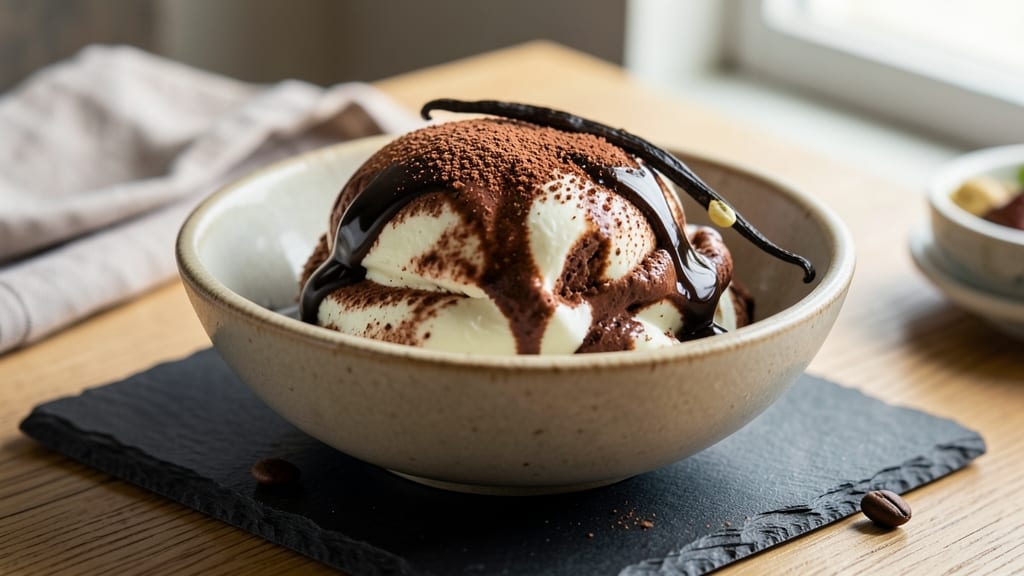
This Belgian chocolate gelato recipe delivers restaurant-quality depth with its ultra-smooth texture and coffee-infused richness. 💛 The secret lies in using high-quality Belgian chocolate (70% cocoa or higher) combined with a touch of espresso powder, creating layers of flavor that balance sweetness with bittersweet complexity.
What sets this apart is the emulsification technique that prevents iciness, ensuring every spoonful is velvety and luxurious.
The process begins with a carefully crafted chocolate base, where dark chocolate and heavy cream are gently heated and emulsified to create a silky foundation.
Adding a splash of coffee extract and a hint of vanilla bean elevates the flavor profile, while a touch of alcohol (like rum or brandy) enhances smoothness without overpowering the chocolate. This isn't just dessert—it's an experience that rivals the finest Belgian chocolatiers.
Once churned to perfection, the gelato develops a creamy, almost mousse-like consistency that melts on the tongue. The freezing method ensures a dense yet scoopable texture, with no graininess or freezer burn.
Topped with crushed pralines or a dusting of cocoa powder, each bite becomes a celebration of Belgian chocolate craftsmanship.
Whether you're serving this as a decadent finale to a dinner party or treating yourself to a luxurious solo indulgence, this recipe delivers professional results at home.
The coffee infusion adds an unexpected depth that pairs beautifully with the chocolate's natural richness, making it a standout dessert that's as impressive as it is delicious.
Ingredients for belgian chocolate gelato
Six servings of velvety Belgian chocolate gelato with coffee-infused depth and professional texture.
| Ingredient | Amount | Notes |
|---|---|---|
| High-Quality Belgian Dark Chocolate (70% cocoa or higher) 🍫 | 12 oz | Valrhona or Callebaut preferred |
| Heavy Cream 🥛 | 2 cups | Whole milk fat content only |
| Granulated Sugar 🍚 | ½ cup | Fine grain preferred |
| Instant Espresso Powder ☕ | 2 tbsp | High-quality brand recommended |
| Vanilla Bean 🌿 | 1 whole | Scraped seeds used |
| Dark Rum or Brandy 🍷 | 1 tbsp | Optional for smoothness |
| Egg Yolks 🥚 | 2 whole | Fresh, room temperature |
| Unsalted Butter 🧈 | 2 tbsp | European-style preferred |
| Crushed Pralines 🍬 | ¼ cup | For garnish, optional |
| Cocoa Powder 🍫 | 1 tbsp | For dusting, Dutch-process |
| Salt 🧂 | ¼ tsp | Fine sea salt |
The Belgian chocolate is non-negotiable here—Valrhona or Callebaut deliver that signature depth. Look for bars labeled 70% cocoa or higher, and if possible, grab them from a specialty shop like Williams Sonoma or Sur La Table where they're stored properly. The heavy cream should be whole milk fat content only—no substitutions here. For the espresso powder, Starbucks or Lavazza are reliable brands, but avoid instant coffee granules. The vanilla bean? Madagascar Bourbon is the gold standard, but any high-quality Madagascar will work. If you're using alcohol, dark rum or brandy adds smoothness without overpowering the chocolate.
No Belgian chocolate? High-end dark chocolate from Lindt or Ghirardelli (60-70% cocoa) works in a pinch. Short on espresso powder? Strong brewed coffee reduced by half mimics the intensity. The egg yolks must be fresh—room temperature for best emulsification. For the butter, European-style (like Plugrá) has higher fat content and better flavor. The pralines can be swapped for crushed hazelnuts or chopped pistachios if unavailable. Always use Dutch-process cocoa powder for dusting—it's smoother and less bitter than natural cocoa.
Store the finished gelato in an airtight container with parchment paper between layers to prevent freezer burn. Keeps for 2-3 weeks in the freezer, though it's best enjoyed within 10 days for peak texture. For serving, let it sit at room temperature for 5-10 minutes before scooping. The emulsified base means it won't be as hard as traditional ice cream—scoop gently to maintain that velvety consistency. Portion into individual containers if gifting—freeze flat for easier slicing later.
Why You'll Love This Recipe
- No Churn Magic: I swear by this method—just blend, freeze, and scrape. No ice cream maker required, and the heavy cream whips into silkiness with zero fuss.
- Espresso Boost: That pinch of instant espresso powder? It’s the secret weapon. Deepens the chocolate’s richness without tasting like coffee—trust me, it’s subtle but chef’s kiss.
- Weeknight Luxury: Perfect for when you crave something fancy but can’t be bothered. Scoop it straight from the freezer or serve it in cones—still feels like a treat, even at 9 PM.
- Budget-Friendly Splurge: You’d pay $10 for a pint at the shop, but this costs half that. The Belgian chocolate makes it taste premium, and leftovers? They last forever in the freezer.
Step-by-step instructions for Belgian chocolate gelato
Master this technique and you'll achieve a velvety texture that rivals artisan gelato shops.
🍳 Step 1: Create the Chocolate Base
In a heavy-bottomed saucepan, combine the 12 oz High-Quality Belgian Dark Chocolate (70% cocoa or higher), 2 cups Heavy Cream, 0.5 cup Granulated Sugar, 2 tbsp Instant Espresso Powder, and 0.25 tsp Salt. Stir over medium-low heat until the chocolate melts completely and the mixture reaches 160°F. You'll know it's ready when the mixture is smooth and glossy with no visible chocolate particles.
This temperature is crucial—it ensures the chocolate melts evenly without burning. Remove from heat and stir in the scraped seeds from 1 whole Vanilla Bean and 1 tbsp Dark Rum or Brandy (if using). Let the mixture steep for 10 minutes to infuse the flavors fully. The aroma should be rich and complex, with deep chocolate and coffee notes.
🍳 Step 2: Temper the Egg Yolks
In a separate bowl, whisk together the 2 whole Egg Yolks and 2 tbsp Unsalted Butter until smooth and slightly thickened. Slowly temper the chocolate mixture by pouring ½ cup of the hot chocolate base into the egg yolks while whisking constantly. This prevents the eggs from scrambling from the heat.
Once fully incorporated, pour the tempered egg mixture back into the saucepan with the remaining chocolate base. Return to low heat and stir continuously for 3-5 minutes until the mixture thickens to 170°F. It should coat the back of a spoon and leave a clean trail when you run your finger through it. This indicates proper emulsification—no graininess or separation.
⏰ Step 3: Chill and Strain
Transfer the mixture to a clean bowl and cover with plastic wrap, pressing the wrap directly onto the surface to prevent a skin from forming. Chill in the refrigerator for at least 4 hours or until completely cold. This step is essential for developing the gelato's signature smooth texture.
After chilling, strain the mixture through a fine-mesh sieve into a clean container. This removes any potential lumps and ensures an ultra-smooth final product. The strained mixture should be thick, glossy, and ready for churning. If it's too thick, you can add 1-2 tablespoons of cold Heavy Cream to reach the ideal consistency.
🍦 Step 4: Churn to Perfection
Pour the chilled mixture into an ice cream maker and churn according to the manufacturer's instructions, typically 20-25 minutes. The gelato is ready when it forms a thick, creamy consistency that holds its shape when scooped. You'll notice it pulls away from the sides of the bowl slightly, indicating proper churning.
For best results, transfer the gelato to a lidded container and freeze for 2-4 hours before serving. This additional freezing time allows the flavors to meld and the texture to set properly. When ready to serve, scoop quickly and garnish with 0.25 cup Crushed Pralines and a dusting of 1 tbsp Cocoa Powder for a sophisticated finish.
Pro Tips For Making Belgian Chocolate Gelato
- Temper the Chocolate: Melt the Belgian chocolate slowly over a double boiler—never direct heat—until it’s just past 110°F (43°C). Too hot, and the cocoa butter separates, giving you grainy gelato. I learned this the hard way after scraping chocolate bits out of my ice cream maker.
- Whisk in the Espresso: Dissolve the instant espresso powder in warm cream first, then whisk it into the chocolate mixture. Cold cream makes the powder clump like tiny coffee rocks. Stir until fully integrated—no lumps, or you’ll taste gritty bits later.
- Scrape the Ice Cream Maker: Every 15 minutes during churning, stop and scrape down the sides of the bowl with a rubber spatula. The cream clings to metal, and if you skip this, your gelato turns out uneven—some parts icy, others soupy. (Yes, even if you’re impatient like me.)
- Freeze the Vanilla: Split the vanilla bean, scrape the seeds into the mixture, then freeze the empty pod in a tiny bag of sugar for next time. The seeds lose potency fast, and leftover pods make a cheap, flavor-packed upgrade for future batches.
Storing and reheating your leftovers
Freezer Storage
Store your Belgian chocolate gelato in an airtight container with parchment paper between layers to prevent freezer burn. I use glass Pyrex containers with snap-on lids—they keep flavors fresh longer.
The gelato maintains peak texture for 10 days in the freezer, though it stays edible for up to 3 weeks. Label containers with the date to track freshness. ❄️
Thawing for Serving
Let gelato sit at room temperature for 5-10 minutes before scooping to maintain its velvety consistency. For a quicker option, transfer the container to the refrigerator for 15-20 minutes—this softens it just enough for easy serving without losing texture. Never microwave, as it destroys the delicate emulsification. 💡
Reheating Leftovers
If your gelato becomes too hard, place the sealed container in a bowl of warm water (never hot) for 5-10 minutes. Stir gently to redistribute any separated cream.
For a richer texture, add 1 tablespoon of heavy cream while reheating. This method restores smoothness without altering the flavor profile. 🥛
Portioning Tips
For individual servings, freeze gelato in silicone molds or small containers. Store flat to create clean slices later. I like using round ramekins for elegant presentation—they freeze evenly and release perfectly. Portioning also prevents freezer burn from air exposure. 🍫
Reviving Texture
If your gelato develops ice crystals, blend it briefly in a food processor with 1 tablespoon of heavy cream until smooth. This technique works wonders for restoring that signature creamy mouthfeel. The key is to blend just until combined—over-processing can make it too thin. ✨
Garnish Preservation
Store crushed pralines and cocoa powder in separate airtight containers at room temperature. Keep them sealed to prevent moisture absorption, which can make pralines soggy. Dust garnishes fresh before serving to maintain their crisp texture and vibrant color. 🍬
Nutrition facts
Frequently asked questions
Why does this recipe use egg yolks?
The egg yolks create an emulsified base that prevents ice crystals from forming, giving you that signature velvety texture. Without them, traditional gelato would be icier and less creamy. The yolks also help stabilize the fat content from the chocolate and cream, ensuring a smoother mouthfeel.
Can I make this without an ice cream maker?
Yes! Pour the chilled mixture into a shallow metal pan, cover with plastic wrap, and freeze for 3-4 hours. Every 30 minutes, vigorously stir the mixture with a fork to break up ice crystals. Repeat until fully frozen (4-5 hours total). The texture won't be as silky, but it'll still be delicious.
What's the secret to the coffee infusion?
The espresso powder adds depth without bitterness, balancing the chocolate's sweetness. Use high-quality instant espresso (like Starbucks) and let it steep with the warm chocolate mixture for 10 minutes—this extracts maximum flavor. Too much powder makes it taste like coffee; too little won't enhance the chocolate enough.
Why does my gelato turn grainy?
Graininess usually means the mixture wasn't properly emulsified or chilled enough. Always strain the base through a fine-mesh sieve after chilling, and ensure the egg yolks are fully incorporated. If it still happens, try adding 1 extra tablespoon of heavy cream before churning to improve smoothness.
Can I substitute Belgian chocolate?
For best results, use high-quality dark chocolate (60-70% cocoa) like Lindt or Ghirardelli. Belgian chocolate's signature depth comes from its high cocoa content and specific processing methods. If you must substitute, avoid milk chocolate—it lacks the necessary richness and bitterness to complement the coffee infusion.