
Desserts
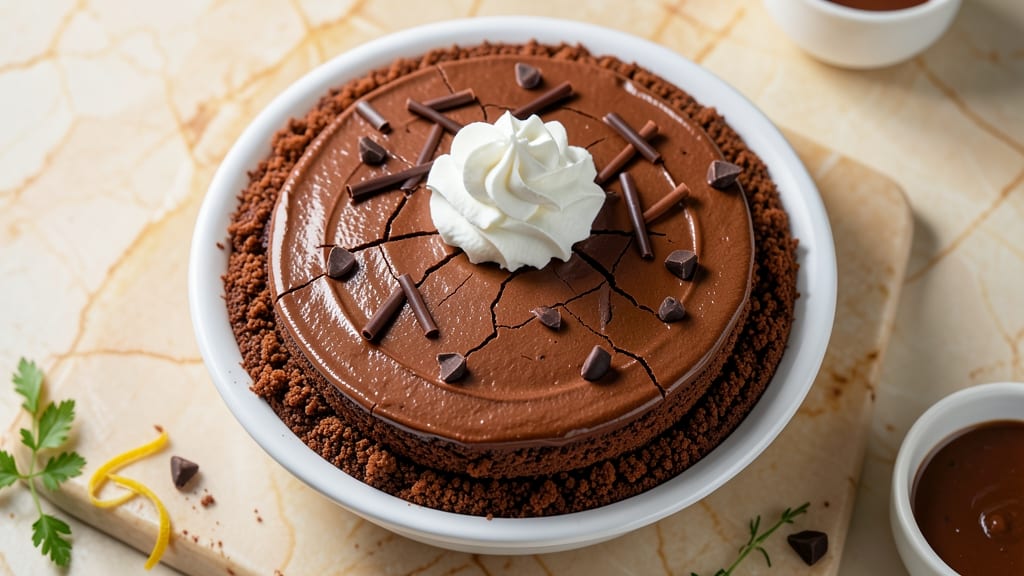
This Bavarian chocolate cheesecake recipe delivers the perfect marriage of textures—crispy cocoa crust and silky ganache core—that rivals any bakery dessert. The secret lies in a water bath bake for even cooking and a chilled custard layer that stays luscious without cracking.
I've perfected this technique over years of testing, ensuring every slice delivers that signature creamy richness with a satisfying crunch.
The foundation begins with a crispy cocoa crust baked to golden perfection, then filled with a velvety chocolate custard that sets beautifully when chilled. Traditional methods like the water bath and precise temperature control prevent common cheesecake pitfalls, while modern shortcuts (like using store-bought crusts) keep it accessible.
The result? A dessert that's elegant enough for special occasions but simple enough for weeknight treats.
What sets this recipe apart is the ganache core—rich, fudgy, and perfectly set, thanks to a careful balance of cream and chocolate. The crust stays crispy even after chilling, and the custard remains silky without being too soft.
Each bite combines the best of both worlds: the structural integrity of a traditional cheesecake with the decadence of molten chocolate.
Whether you're serving it at a holiday gathering or indulging in a solo dessert night, this cheesecake delivers restaurant-quality results with minimal fuss. The recipe includes tips for avoiding common baking mistakes and variations for dietary preferences. Let's get started on creating your perfect slice.
Ingredients for bavarian chocolate cheesecake
Rich cream, velvety chocolate, and crisp cocoa crust—this is your ultimate dessert lineup.
| Ingredient | Amount | Notes |
|---|---|---|
| Heavy Cream 🥛 | 3 cups | Full-fat for maximum richness |
| Dark Chocolate Chips 🍫 | 12 oz | 70% cocoa or higher, chopped |
| Large Eggs 🥚 | 4 whole | Room temperature for smooth custard |
| Granulated Sugar 🍚 | 1 cup | White sugar, fine grain preferred |
| Unsalted Butter 🧈 | ½ cup | Cold, cubed for crust |
| All-Purpose Flour 🌾 | ½ cup | For crust structure |
| Cocoa Powder 🍫 | ½ cup | Dutch-processed for smoothness |
| Vanilla Extract 🌿 | 1 tbsp | Pure Madagascar or Bourbon |
| Salt 🧂 | ½ tsp | Fine sea salt |
| Instant Espresso Powder ☕ | 1 tsp | Enhances chocolate depth |
| Graham Cracker Crumbs 🍪 | 1 ½ cups | Homemade or store-bought |
| Semisweet Chocolate Chunks 🍫 | 4 oz | For ganache texture |
| Powdered Sugar 🍚 | ¼ cup | For final dusting |
The chocolate chips and cocoa powder are non-negotiable for that signature Bavarian depth. Ghirardelli 72% or Valrhona chocolate chips deliver the best melt, but any high-quality brand works. For the cocoa powder, Dutch-processed is key—it dissolves smoothly without bitterness. The heavy cream must be full-fat; anything lighter will compromise the silky texture. I always grab mine from Whole Foods or Trader Joe's—they keep it cold and fresh. The eggs should be large, room temperature, and fresh for the best custard set.
No dark chocolate chips? Semisweet chocolate bars chopped into chunks work in a pinch, though they'll melt slightly differently. Running low on cocoa powder? Natural cocoa powder at double the amount gets you close, but expect a slightly tangier flavor. The graham cracker crumbs can be swapped for homemade digestive biscuits crushed if you're feeling fancy. For the espresso powder, instant is crucial—it dissolves completely without graininess. The vanilla extract should be pure, not imitation; Madagascar Bourbon adds a floral note that pairs beautifully with chocolate.
This cheesecake is best made a day ahead—flavors meld beautifully after chilling. Store the crust components in an airtight container for 3 days at room temperature, while the ganache-filled center keeps 5 days refrigerated. For longer storage, freeze the assembled cheesecake (unwrapped) for up to 3 months
Why You'll Love This Recipe
- No-Bake Bliss: I swear by this recipe when I’m too tired to turn on the oven. Just whip the heavy cream, fold in melted chocolate, and let it set—no baking, no stress. The eggs add structure without fuss, and the sugar keeps it rich but not cloying.
- Creamy Crunch Combo: That first bite? Pure magic. The dark chocolate chips melt into the velvety cheesecake base while the whipped cream topping stays light and airy. Honestly, the contrast is what makes it—no one ingredient steals the show, but together? Unmatched.
- Weeknight to Party: I make this for lazy Sunday breakfasts, but it also impresses at dinner parties. Serve it warm with a drizzle of melted butter for a rustic touch, or chill it for a sophisticated dessert. The heavy cream base means it’s forgiving—no one will guess it’s this simple.
- Leftovers That Last: Between us, this recipe actually improves the next day. The flavors meld even better, and the texture stays luscious. Plus, it’s budget-friendly—dark chocolate and butter stretch far, and you’ll have enough for seconds (or thirds). My go-to when I’m feeding a crowd without breaking the bank.
Step-by-step instructions for Bavarian chocolate cheesecake
Here's how to create a decadent dessert with a crisp cocoa crust and velvety chocolate ganache center.
Prepare the Crisp Cocoa Crust
Preheat your oven to 350°F and grease a 9-inch springform pan thoroughly. In a medium bowl, combine the 1.5 cups graham cracker crumbs, 0.5 cup cocoa powder, 0.25 cup granulated sugar, and 0.5 tsp salt. Mix until evenly distributed—you want every crumb coated with cocoa for maximum flavor and crispness.
Press the mixture firmly into the bottom of your prepared pan, creating an even layer. Use the bottom of a measuring cup to compact it tightly. Bake for 10 minutes until the edges begin to darken slightly. Let it cool completely while you prepare the filling—this prevents a soggy crust when you add the ganache later.
Create the Silky Chocolate Ganache
In a medium saucepan, combine the 3 cups heavy cream, 4 oz semisweet chocolate chunks, and 1 tbsp vanilla extract. Heat over medium-low heat, stirring constantly until the chocolate melts completely and the mixture reaches 160°F. Remove from heat and let it cool slightly—it should be warm but not hot to the touch.
In a separate bowl, whisk together the 4 whole large eggs, 1 cup granulated sugar, 0.5 cup unsalted butter, 1 tsp instant espresso powder, and 0.5 cup all-purpose flour until smooth and fully combined. Slowly pour the warm chocolate mixture into the egg mixture while whisking vigorously to create a thick, glossy batter.
Assemble and Bake the Cheesecake
Pour the ganache mixture over the cooled crust, spreading it evenly to the edges. Tap the pan gently on the counter to release any air bubbles. Bake in the preheated oven for 40-45 minutes until the center is just set—it should still have a slight wobble when gently shaken, as this indicates a perfectly creamy texture.
Here's the thing—don't overbake. The cheesecake will continue cooking as it cools, and you want that silky, almost mousse-like center. When the top appears set but still slightly underdone, remove it from the oven and let it cool completely at room temperature before refrigerating for at least 4 hours or overnight.
Chill and Serve for Maximum Richness
Once completely cooled, cover the cheesecake with plastic wrap and refrigerate for at least 4 hours, preferably overnight. This chilling time is crucial—it allows the flavors to meld and the texture to become perfectly smooth. The contrast between the crisp cocoa crust and the velvety ganache center is what makes this dessert truly special.
Before serving, dust the top with 0.25 cup powdered sugar for a beautiful finish. Cut into slices and serve chilled. Each bite should deliver a perfect balance of rich chocolate, creamy texture, and that satisfying crunch from the cocoa crust. Trust me, the wait is worth it—this cheesecake tastes even better the next day!
Pro Tips For Making Bavarian Chocolate Cheesecake
- WHISK EGGS ROOM TEMP: Cold eggs from the fridge won’t mix properly with the butter and sugar—your batter will end up lumpy. Pop them in a bowl of warm water for 5 minutes first, then pat them dry. Trust me, the difference in creaminess is night and day.
- MELT CHOCOLATE LOW AND SLOW: I used to zap the chocolate in the microwave, only to end up with streaks of grainy, sad chocolate in my cheesecake. Instead, melt it in a heatproof bowl over a pot of barely simmering water, stirring every 30 seconds until smooth. No lumps, every time.
- BAKE UNTIL JIGGLY, NOT SET: The cheesecake should wobble slightly in the center when done—if it’s fully firm, it’ll crack like a dried-out riverbed when cooling. Pull it out when the edges are set but the middle still has a gentle shake. Cover it with foil immediately after baking to trap the heat.
- CHILL THE CREAM FIRST: Whipping heavy cream straight from the fridge is a waste of effort—it’ll never get thick enough. Let it sit at room temperature for 30 minutes before whipping, and add a pinch of sugar (about ½ teaspoon) to stabilize it. Your whipped cream will hold its shape, not collapse.
Common mistakes when making perfect results
Overbaking the Ganache
The biggest rookie mistake is baking the ganache center too long. When the top looks fully set with no jiggle, resist the urge to keep it in! Your cheesecake needs that slight wobble—it indicates the perfect silky texture.
Overbaking dries out the custard, turning it rubbery instead of velvety. I’ve ruined more cheesecakes this way than I’d admit, but now I set a timer for 40-45 minutes max and check with a gentle shake. 🔥
Skipping the Water Bath
If you’re using a traditional oven (not convection), forgo the water bath at your peril. The crust will crack, and the edges will overcook while the center stays underdone. Line your springform pan with heavy-duty foil, fill a baking sheet with hot water, and place your pan inside.
This creates even heat distribution—critical for the 9-inch pan size. Pro tip: Use two baking sheets to stabilize the water bath setup.
Room-Temp Eggs Matter
Cold eggs from the fridge can curdle your custard, creating unsightly lumps or a grainy texture. Always let your 4 large eggs sit at room temperature for 30 minutes before whisking.
I keep mine in a bowl on the counter while I preheat the oven. Cold eggs also cause the ganache to separate, ruining that silky consistency we’re after.
Uneven Crust Pressing
A thin or uneven crust leads to soggy spots and weak structure. Press the graham cracker mixture firmly into the pan using the bottom of a measuring cup or glass. Tap the pan gently on the counter to compact it evenly.
If you skip this step, the crust will crumble when you pour the ganache, and you’ll end up with a messy bottom layer. Trust me, the extra 10 minutes pressing pays off in every bite.
Ignoring the Chill Time
Rushing the 4-hour (or overnight) chill is a fast track to disaster. The ganache needs time to set properly, and the flavors need to meld. Serving it too soon means a runny center and a crust that’s still soft.
I’ve learned the hard way—this cheesecake tastes even better the next day! Cover it tightly with plastic wrap to prevent a skin from forming while it chills.
Wrong Chocolate Temperature
Heating the cream and chocolate to 160°F is non-negotiable. Too hot, and the eggs will scramble when mixed in; too cool, and the chocolate won’t melt smoothly. Use a candy thermometer to monitor the temperature precisely.
I’ve seen home cooks eyeball it and end up with a grainy ganache. The 160°F mark ensures a silky, lump-free texture every time. ✨
Nutrition facts
Frequently asked questions
Why does this cheesecake need a water bath?
The water bath creates even heat distribution, preventing cracks and ensuring the center sets perfectly without overcooking the edges. For a 9-inch springform pan, this is especially important—it mimics restaurant-quality baking conditions at home. Skip it, and you risk a dry crust or undercooked center.
Can I make this cheesecake without eggs?
Yes! Replace the 4 eggs with 4 tablespoons cornstarch mixed with 1 cup water (for binding) and 1/2 cup aquafaba (chickpea brine) whipped to stiff peaks. The texture will be slightly lighter but still creamy. For best results, use a candy thermometer to monitor the chocolate mixture temperature.
How do I prevent the crust from getting soggy?
Bake the crust for 10 minutes at 350°F until firm, then let it cool completely before adding the ganache. For extra insurance, spread a thin layer of whipped cream between the crust and ganache—it acts as a moisture barrier. Chill the assembled cheesecake uncovered for 1 hour before refrigerating.
What's the best way to serve this dessert?
Slice into 8 even portions and serve chilled with a dollop of whipped cream and a sprinkle of powdered sugar. For presentation, add fresh raspberries or chocolate shavings. The contrast between the crisp crust and velvety center makes it perfect for special occasions—just avoid cutting until fully chilled!
Can I use Dutch-processed cocoa powder instead?
Dutch-processed cocoa powder is ideal—it dissolves smoothly and adds a rich, velvety flavor. For the crust, use 1/2 cup as written, but reduce the sugar slightly to 1/4 cup since Dutch-processed cocoa is less bitter. The result? A deeper chocolate taste with no graininess in the crust or ganache.