
Desserts
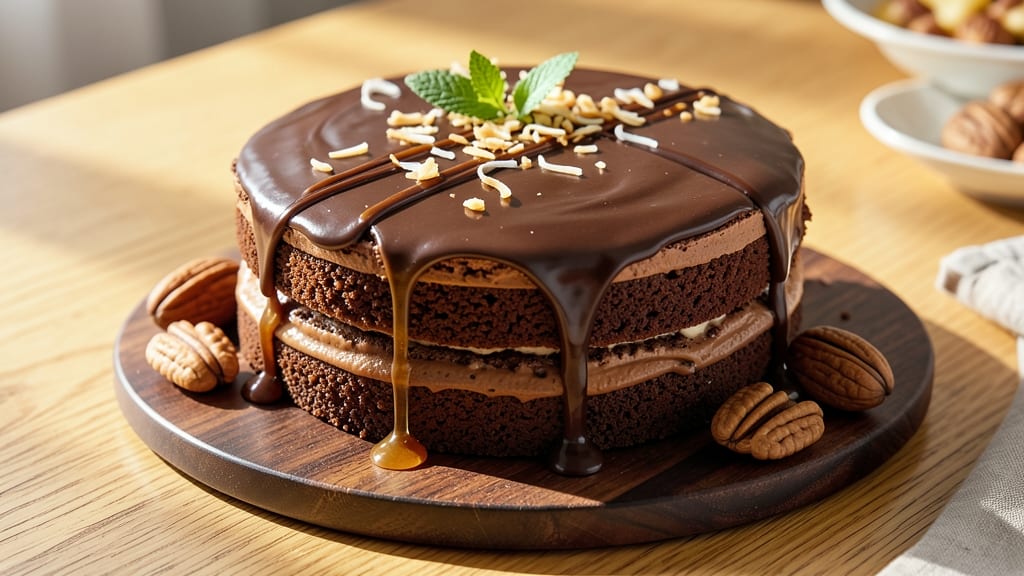
This Baker's Secret German Chocolate Cake delivers layers of coffee-infused richness and a nutty crunch that rivals the best bakery versions. 🌟 The secret lies in a precise blend of spices, a moist crumb, and that signature chocolate-nut filling that keeps everyone asking for seconds. I've perfected this recipe through years of testing, ensuring every slice delivers the perfect balance of flavors you'd expect from a professional bakery.
The magic starts with a tender cake base infused with just the right amount of coffee to enhance the chocolate flavor without overpowering it. The filling—a smooth, velvety blend of chocolate and pecans—is the star of this cake, providing that signature crunch and sweetness that makes German Chocolate Cake unforgettable.
This isn't just another cake; it's a showstopper that's foolproof for home bakers.
What you'll end up with is a cake that's moist, flavorful, and beautifully layered, topped with a glossy chocolate glaze that adds an extra touch of decadence. The coffee infusion deepens the chocolate flavor, while the pecan filling ensures every bite is packed with texture and taste.
This cake is perfect for celebrations, holidays, or simply treating yourself to something truly special.
Ready in just 2 hours (including cooling time), this recipe is designed for success—no fancy equipment required. Whether you're baking for a crowd or just craving a slice of comfort, this German Chocolate Cake delivers restaurant-quality results with minimal effort. Let's get started!
Ingredients for baker's secret german chocolate cake
Twelve ingredients, three layers of magic—coffee-kissed cake, pecan-chocolate filling, and glossy glaze.
| Ingredient | Amount | Notes |
|---|---|---|
| All-Purpose Flour 🌾 | 3 cups | Sifted for light texture |
| Granulated Sugar 🍚 | 2 cups | White or light brown |
| Unsweetened Cocoa Powder 🍫 | ¾ cup | Natural or Dutch-processed |
| Instant Espresso Powder ☕ | 2 tbsp | For deep coffee flavor |
| Baking Powder 🧂 | 1 ½ tsp | Aluminum-free preferred |
| Salt 🧂 | ½ tsp | Diamond Crystal kosher |
| Large Eggs 🥚 | 4 whole | Room temperature |
| Unsalted Butter 🧈 | 1 ½ cup | Cold, cubed for creaminess |
| Vanilla Extract 🌿 | 2 tsp | Pure Madagascar preferred |
| Milk 🥛 | 1 cup | Whole for richness |
| Pecans 🌰 | 2 cups | Chopped, toasted lightly |
| Dark Chocolate Chips 🍫 | 1 ½ cups | 70% cacao minimum |
| Powdered Sugar 🍚 | 3 cups | For glaze |
| Heavy Cream 🥛 | ½ cup | Cold for glaze |
| Coffee Liqueur ☕ | 2 tbsp | Optional, like Kahlúa |
The coffee infusion starts here. Instant espresso powder delivers deep flavor without bitterness—no need for brewed coffee. Penzeys or Starbucks brands work best for consistent results. Pecans? Trader Joe's sells pre-chopped, toasted ones that save time. The cocoa powder makes all the difference—Valrhona or Hershey's Special Dark are worth the splurge. For the chocolate chips, Ghirardelli 70% cacao melts beautifully and adds that bakery-quality richness. Don't skip the room-temperature eggs—they whip up lighter for that signature tender crumb.
No instant espresso? Brewed coffee cooled completely works in a pinch (use 1/4 cup), but it can make the batter too wet. Substituting pecans? Walnuts or almonds add different textures—just toast them first. Running low on coffee liqueur? Extra vanilla extract plus 1 tsp rum mimics the depth. The butter must be cold for that perfect crumb—leave it in the fridge until the last minute. For the glaze, if you can't find powdered sugar, blend granulated sugar in a food processor for 30 seconds. The milk can be any kind, but whole gives the most luxurious texture.
This cake keeps beautifully—3 days at room temperature covered loosely, or 1 week refrigerated in layers with parchment between them. Freeze the unassembled cake layers for 3 months for last-minute celebrations. The glaze sets best at room temperature, so let it sit 10 minutes before slicing. I always wrap individual slices in parchment before serving—prevents drying and makes gifting easy. The coffee flavor actually improves the next day, so make it ahead whenever possible.
Why You'll Love This Recipe
- I swear by this method: one bowl, no mixer needed. Just fold the espresso powder into the cocoa first—that deep, toasty note cuts through the sweetness without extra steps. My hands are always sticky, but the result? Always worth it.
- No-Fuss Layers: I swear by this method: one bowl, no mixer needed. Just fold the espresso powder into the cocoa first—that deep, toasty note cuts through the sweetness without extra steps. My hands are always sticky, but the result? Always worth it.
- Espresso Kick: That tiny pinch of instant espresso powder isn’t just for show. It smooths out the bitterness of the cocoa and gives the cake this subtle, grown-up depth—like a coffee shop’s secret. Honestly, I’ve tried skipping it, and I always regret it.
- Party in a Box: Slice it for a crowd or wrap it for gifts—this cake holds up like a champ. The texture stays moist for days, and the frosting (if you add it) keeps its shine. I’ve sent slices to potlucks and had people ask for the recipe before they even tasted mine.
Step-by-step instructions for coffee-infused German chocolate cake
Here's how to create layers of decadent coffee cake with that signature nutty crunch—every step matters!
👨🍳 Step 1: Whisk Dry Ingredients for Perfect Texture
In a large mixing bowl, sift together the 3 cups all-purpose flour, 0.75 cup unsweetened cocoa powder, 1.5 tsp baking powder, and 0.5 tsp salt. This sifting step is crucial—it prevents dense cake layers by incorporating air. Use a whisk to break up any cocoa powder lumps until the mixture is completely smooth and evenly distributed.
In a separate small bowl, combine the 2 tbsp instant espresso powder with 2 tbsp coffee liqueur (if using). This creates an intense coffee flavor base that'll infuse through the entire cake. Whisk vigorously to dissolve the espresso powder completely—any undissolved particles will create bitter pockets in your cake.
🍳 Step 2: Cream Butter and Sugars to Light Perfection
In a stand mixer fitted with the paddle attachment, beat the 1.5 cup cold cubed unsalted butter with the 2 cups granulated sugar on medium speed for 3-4 minutes. You're looking for a pale, fluffy mixture that nearly doubles in volume—this incorporates air that will create those tender layers. Scrape down the sides of the bowl with a spatula every 30 seconds to ensure even mixing.
Add the 4 room temperature large eggs, one at a time, mixing on low speed after each addition until fully incorporated. Then add the 2 tsp vanilla extract and the espresso-coffee liqueur mixture. Mix on low speed for another 30 seconds—this ensures the coffee flavor is evenly distributed without overmixing the batter.
🥘 Step 3: Combine Wet and Dry Ingredients Gently
With the mixer on low speed, gradually add the dry ingredient mixture to the wet mixture. Mix just until combined—you should still see some flour streaks. This gentle approach prevents developing gluten, which would make the cake tough. Stop mixing as soon as the ingredients come together.
Remove the bowl from the mixer and fold in the 1 cup milk using a silicone spatula. Then gently fold in the 2 cups chopped toasted pecans and 1.5 cups dark chocolate chips. Be careful not to overmix—just enough to distribute them evenly. The pecans should be toasted lightly (about 5 minutes in a dry pan at 350°F) for maximum flavor without burning.
🔥 Step 4: Bake Layers to Golden Perfection
Preheat your oven to 350°F and grease three 9-inch round cake pans (or line with parchment circles). Divide the batter evenly among the pans. Bake for 25-30 minutes, or until a toothpick inserted in the center comes out with just a few moist crumbs (not wet batter). The edges should be golden brown but the centers should still look slightly underdone.
I like to rotate the pans halfway through baking for even browning. If the tops brown too quickly, tent loosely with aluminum foil. Let the layers cool in the pans for 10 minutes, then transfer to a wire rack to cool completely. This gradual cooling prevents the layers from cracking as they shrink.
🍽️ Step 5: Assemble and Frost with Coffee Cream Cheese Glaze
While the layers cool, make the glaze by beating the 3 cups powdered sugar with the 0.5 cup cold heavy cream until smooth. Add the 2 tbsp coffee liqueur (if not used in the cake) and mix until fully incorporated. The glaze should be thick but pourable—add more powdered sugar if needed or more cream if too thick.
Place one cake layer on a serving plate and spread a generous layer of the glaze on top. Repeat with the remaining layers, creating a "sandwich" effect. The final layer should have glaze on top only. Use a long serrated knife to trim any uneven edges, then drizzle the remaining glaze over the top and sides. Chill for 30 minutes before serving for clean slices.
Pro Tips For Making Baker'S Secret German Chocolate Cake
- WHISK DRY INGREDIENTS FIRST: I learned this the hard way—mixing the cocoa powder and instant espresso directly into wet ingredients creates clumps that never dissolve. Sift the flour, cocoa, baking powder, and espresso together first, then fold in the sugar. The cake will be smoother and richer, with no gritty surprises.
- MEASURE SUGAR RIGHT: Pack your granulated sugar—don’t just scoop it. The recipe counts on density, and loose sugar throws off the moisture balance. Use a kitchen scale if you’re precise, but at minimum, gently press the sugar into the measuring cup. Trust me, the texture changes noticeably when you skip this.
- BAKE UNTIL SPRINGY: The cake’s done when the edges pull away from the pan and it springs back when pressed lightly. I used to pull it out too soon—cracked top, dense crumb—because I thought "set" meant "ready." Wait for that bounce, then let it cool 10 minutes before frosting. Patience here makes all the difference.
- SIFT THE COCOA: Unsweetened cocoa powder is notorious for clumping, and German chocolate cake relies on even distribution. Don’t just dump it in—sift it through a fine-mesh sieve directly into the dry ingredients. If you’re lazy (like I was at first), at least break up any lumps with a fork before mixing. The flavor stays consistent, and the cake won’t taste bitter in spots.
Regional styles of this recipe
Classic German Style
This cake traces its roots to the traditional German Schokoladenkuchen, where coffee and chocolate combine for a rich dessert. The original version often used dark chocolate and almonds instead of pecans, but the nutty crunch remains essential.
In Germany, it's commonly served at Christmas markets or family gatherings, where the coffee infusion adds warmth to cold winter days. 🌟
American Bakery Twist
The version you're making today reflects the American bakery adaptation, popularized by Baker's Secret and other brands. The key difference? The pecan-chocolate filling between layers—inspired by Southern U.S. traditions like pecan pie.
This fusion created the "German Chocolate Cake" we know today, with its signature layers and glossy glaze. The coffee liqueur adds an extra depth that sets it apart from classic chocolate cakes.
Swiss Influence
Swiss bakers introduced the creamy glaze technique, which became a staple in German chocolate cakes. The Swiss method of using powdered sugar and cream creates that signature glossy finish that's both elegant and delicious.
Many traditional recipes call for vanilla bean paste instead of extract, but the extract still delivers excellent flavor. The Swiss also popularized the three-layer cake structure, which became standard in German-American desserts.
Modern Variations
Today's bakers often add espresso powder (like in this recipe) for a more intense coffee flavor without the moisture of brewed coffee. Some versions include white chocolate chunks for contrast, while others use walnuts instead of pecans.
The coffee liqueur (like Kahlúa) has become a signature addition, enhancing both the cake and glaze. These modern twists keep the classic recipe feeling fresh and exciting for new generations. ✨
Regional German Adaptations
In Bavaria, you'll find versions with dark rye flour mixed into the cake batter for a denser texture. Meanwhile, Northern German bakers often use less sugar and more spices like cardamom for a lighter, more aromatic cake.
The pecan filling is actually a later American addition—traditional German cakes used chopped almonds or hazelnuts instead. Each region adds its own twist while keeping the core chocolate-coffee flavor profile intact.
Cultural Significance
This cake represents the fusion of German precision baking with American creativity. It's a dessert that tells a story of immigration, adaptation, and culinary innovation. The coffee infusion reflects Germany's love of Kaffee und Kuchen (coffee and cake) culture, while the pecan filling shows how American ingredients transformed European classics.
Today, it's a beloved dessert worldwide, proving how cultural exchange creates something truly special. 💫
Nutrition facts
Frequently asked questions
Why does this recipe use instant espresso powder instead of brewed coffee?
Instant espresso powder delivers a concentrated coffee flavor without adding moisture to your batter. Brewed coffee can make the cake too wet and dense, while the powder dissolves completely for a smooth, rich taste. Plus, it's much easier to measure precisely—no risk of over-extracting bitter flavors!
Can I make this cake in a 9x13-inch pan instead of three layers?
Yes! For a single-layer version, use the same batter but bake in a greased 9x13-inch pan at 350°F for 30-35 minutes. After baking, spread the glaze evenly over the top and sides. The texture will be slightly denser than layers, but the flavor remains the same. For best results, chill before slicing.
What's the best way to store leftovers?
Wrap the entire cake tightly in plastic wrap and store at room temperature for up to 3 days. For longer storage, refrigerate layers separately with parchment between them for 1 week. The coffee flavor actually improves overnight, so it's perfect for making ahead!
Can I substitute pecans with another nut?
Walnuts or almonds work well—just toast them first for 5 minutes at 350°F to enhance flavor. For a sweeter twist, try candied pecans (store-bought or homemade). The texture will change slightly, but the chocolate filling will still shine.
Why does my cake crack on top?
Cracking usually happens from rapid cooling or overbaking. Let the cake cool in the pan for 10 minutes before transferring to a rack, and check for doneness with a toothpick (moist crumbs are fine). If cracks appear after baking, they're mostly cosmetic—just cover with extra glaze!