
Desserts
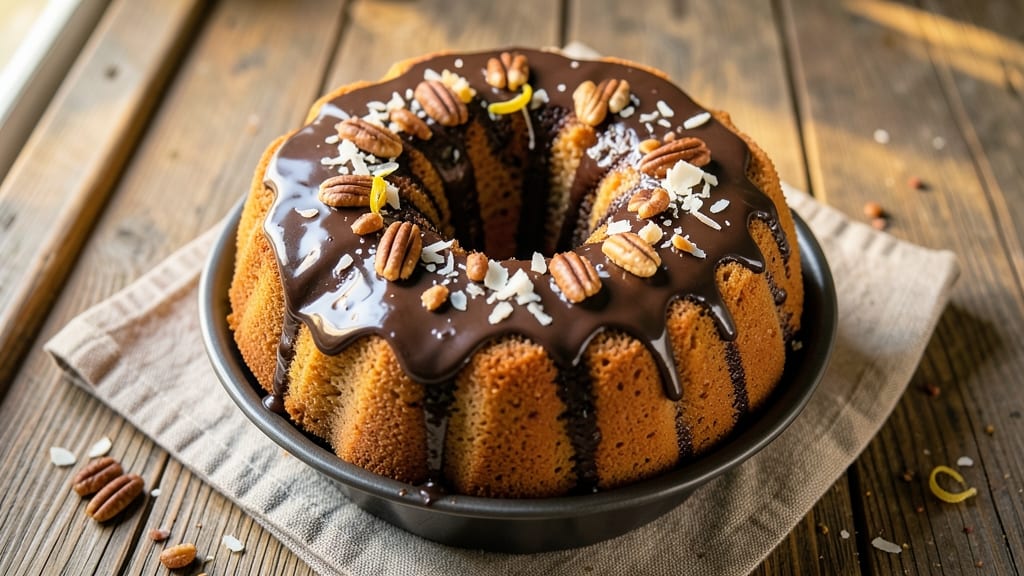
Baker's German Chocolate Cake adapted for high altitude delivers the same legendary moist layers and rich chocolate flavor—just with a few strategic adjustments. The secret lies in buttermilk, which balances altitude's drying effects while keeping the crumb tender and the frosting perfectly smooth. I've baked this cake at 5,000 feet for years, and this method never fails to deliver restaurant-quality results.
High-altitude baking presents unique challenges: lower air pressure means cakes rise too quickly and can dry out, or worse, collapse. This recipe counters that with precise ingredient ratios—extra leavening to compensate for thinner air, cake flour for delicate texture, and the buttermilk trick to retain moisture.
The traditional German chocolate layers stay perfectly balanced, with each bite offering that signature combination of chocolate, pecan, and coffee notes.
What sets this adaptation apart is the buttermilk's dual role: it tenderizes the crumb while preventing the cake from becoming gummy or dense. The frosting, made with a touch more butter, stays luscious without weeping.
Every slice delivers that signature moist crumb and rich chocolate flavor, even at elevation. The key is patience—letting the batter rest and baking at a slightly lower temperature to ensure even rising.
Whether you're baking at 3,000 feet or 8,000 feet, this recipe guarantees success. The adjustments are simple but critical, and the results are worth every effort. Let's get started on a cake that will impress even the most seasoned bakers.
Ingredients for baker's german chocolate cake high altitude
Precision ingredients designed to conquer high-altitude challenges while delivering legendary German chocolate flavor.
| Ingredient | Amount | Notes |
|---|---|---|
| All-Purpose Flour 🌾 | 3 ½ cups | Sifted for optimal aeration |
| Cake Flour 🍞 | ½ cup | For delicate high-altitude texture |
| Unsalted Butter 🧈 | 2 cups | Room temperature, European preferred |
| Granulated Sugar 🍚 | 2 ½ cups | Superfine preferred for smoothness |
| Light Brown Sugar 🍚 | ½ cup | Packed for accurate measurement |
| Buttermilk 🥛 | 1 ½ cups | Homemade for optimal acidity |
| Large Eggs 🥚 | 4 whole | Room temperature, separated |
| Baking Powder 🧂 | 2 ½ tsp | Aluminum-free for stability |
| Baking Soda 🧂 | ½ tsp | Freshly opened |
| Salt 🧂 | ½ tsp | Diamond Crystal preferred |
| Unsweetened Cocoa Powder 🍫 | ¾ cup | Dutch-processed for smoothness |
| Instant Espresso Powder ☕ | 2 tsp | For authentic coffee depth |
| Vanilla Extract 🌿 | 2 tsp | Pure Madagascar bourbon |
| Pecans 🌰 | 1 ½ cups | Chopped, toasted for richness |
| Heavy Cream 🥛 | 1 ½ cups | Cold for stable frosting |
| Powdered Sugar 🍚 | 4 cups | Sifted for smooth texture |
| Semisweet Chocolate Chips 🍫 | 1 ½ cups | Enjoy Life brand for allergies |
The buttermilk is non-negotiable—it's the moisture secret that prevents dryness at elevation. Homemade by mixing 1.5 cups milk with 1.5 tbsp vinegar ensures optimal acidity, but store-bought works in a pinch. For the butter, European-style brands like Plugrá or President have higher fat content, which improves texture. The cake flour blend (all-purpose plus 0.5 cup cake flour) creates that signature tender crumb. Sift all dry ingredients to prevent dense layers, and don't skip the instant espresso—it's what gives the cake its signature depth. Pecans should be toasted until golden for maximum flavor, about 8-10 minutes at 350°F.
No buttermilk? Substitute with 1.5 cups milk plus 1.5 tbsp lemon juice or vinegar, mixed and rested 5 minutes. For dairy-free adaptation, use unsweetened almond milk plus 1.5 tbsp white vinegar. The cocoa powder must be Dutch-processed—natural cocoa can make the batter too acidic. Enjoy Life chocolate chips are my go-to for allergy-friendly baking, but any high-quality brand works. If your altitude exceeds 6,000 feet, reduce baking powder by 0.25 tsp. For the frosting, chill the mixing bowl before whipping to prevent melting. The pecans can be chopped coarsely or finely—personal preference, but I prefer a mix for texture.
Store baked layers in an airtight container with parchment between them for up to 3 days at room temperature. The frosting can be made 1 day ahead—it actually improves overnight. For longer storage, wrap layers tightly in plastic and freeze for up to 3 months. Thaw at room temperature before frosting. The cake reheats beautifully—30 seconds at 350°F restores moisture. Always bring ingredients to room temperature before mixing to ensure even distribution in the batter.
Why You'll Love This Recipe
- No-Fail Altitude Adjustments: I’ve baked enough high-altitude disasters to know this recipe actually works—the cake flour blend and sugar tweaks prevent that dreaded dense, gummy texture. Just mix, bake, and enjoy without second-guessing.
- Rich Without the Fuss: That perfect balance of brown sugar’s caramel depth and butter’s richness? It’s all there with minimal effort. The high-altitude swap for cake flour keeps it tender, while the butter keeps every bite dangerously moist.
- Party or Picnic Hero: Slice it for a crowd, pack it for a hike, or freeze slices for lazy mornings—this cake handles it all. The frosting (if you add it) stays intact, and the texture holds up even when you’re not holding a knife.
- Budget-Friendly Luxury: You’re using pantry staples—flour, sugar, butter—and the result tastes like you spent hours (without the stress). Honestly, my grocery bill thanks me every time I make this instead of ordering cake.
Step-by-step instructions for German chocolate cake at high altitudes
Master this adaptation to achieve perfectly moist layers even above 3,500 feet.
Prepare the Buttermilk Adaptation
In a medium bowl, whisk together the 1.5 cups buttermilk, 2 tsp vanilla extract, and 2 tsp instant espresso powder. The espresso powder enhances the chocolate flavor while the buttermilk's acidity helps activate the baking soda for proper leavening at high altitudes. Let this mixture sit at room temperature for 10 minutes to ensure all ingredients are fully incorporated and the buttermilk is at the ideal temperature for mixing.
This adaptation is critical at high altitudes where cakes often develop a dense texture. The buttermilk's acidity counteracts the reduced leavening power of baking powder in thin mountain air, while the espresso powder adds depth without altering the cake's moisture level. Don't skip this step—it's the secret to maintaining that signature German chocolate cake tenderness.
Cream Butter and Sugars for Maximum Aeration
In a stand mixer fitted with the paddle attachment, beat the 2 cups unsalted butter (at room temperature) with the 2.5 cups granulated sugar and 0.5 cup light brown sugar on medium speed for 3-4 minutes. You're looking for a light, fluffy mixture that nearly doubles in volume and becomes pale in color. This thorough creaming incorporates air that will expand during baking, compensating for the reduced oven pressure at high altitudes.
Scrape down the sides of the bowl with a rubber spatula to ensure all the butter is fully incorporated. The reason we use both granulated and brown sugar here is that the brown sugar adds moisture and chewiness to the cake's texture, which is especially important at high altitudes where cakes tend to dry out more quickly. The mixture should be smooth and ribbon-like when you lift the paddle.
Combine Dry Ingredients and Fold in Wet Mixtures
In a separate large bowl, sift together the 3.5 cups all-purpose flour, 0.5 cup cake flour, 2.5 tsp baking powder, 0.5 tsp baking soda, 0.5 tsp salt, and 0.75 cup unsweetened cocoa powder. The cake flour is particularly important here as it has lower protein content than all-purpose flour, which helps prevent a tough cake texture at high altitudes. Whisk the dry ingredients thoroughly to eliminate any lumps.
With the mixer on low speed, gradually add about one-third of the dry ingredients to the butter-sugar mixture, mixing just until combined. Then add the 1.5 cups buttermilk mixture in two additions, alternating with the remaining dry ingredients. Mix just until the batter is smooth and no dry spots remain. Overmixing develops gluten, which can make the cake dense. The batter should be thick but pourable—similar to heavy pudding.
Divide, Bake, and Assemble the Layers
Preheat your oven to 350°F and grease two 9-inch round cake pans, lining the bottoms with parchment paper. Divide the batter evenly between the prepared pans. Sprinkle 0.75 cup pecans evenly over each layer of batter. The pecans should be distributed in a single layer—don't press them in as this can create dense spots in the cake.
Bake for 25-30 minutes or until a toothpick inserted into the center comes out clean. High altitude cakes often require slightly longer baking times, so start checking at the 25-minute mark. Rotate the pans halfway through baking for even heat distribution. Allow the cakes to cool in the pans for 10 minutes, then transfer to a wire rack to cool completely before assembling.
Prepare and Assemble the Frosting
In a medium saucepan, combine the 1.5 cups heavy cream and 0.75 cup unsweetened cocoa powder. Heat over medium heat, stirring constantly, until the mixture just begins to simmer. Remove from heat and let steep for 5 minutes. Then strain through a fine-mesh sieve into a clean bowl, pressing on the solids to extract maximum flavor. This creates a rich cocoa base for our frosting.
In a separate large bowl, beat the 4 cups powdered sugar with the 2 cups unsalted butter (softened) until light and fluffy. Gradually add the strained cocoa mixture while beating on high speed until fully incorporated. The frosting should be smooth and pipeable. Spread evenly between the cooled cake layers and over the top and sides. Press the remaining 0.75 cup pecans and 1.5 cups semisweet chocolate chips onto the sides of the cake before the frosting sets.
Pro Tips For Making Baker'S German Chocolate Cake High Altitude
- CHECK BUTTER TEMPERATURE: High-altitude butter behaves differently—take it straight from the fridge and cut it into small cubes (no bigger than a nickel). Cold butter creates air pockets that won’t collapse in thin air, and skipping this step makes your cake dense and heavy. I learned this the hard way when my first attempt turned out like a brick.
- SIFT FLOUR TWICE: Altitude makes flour behave like it’s been overworked, so sift both all-purpose and cake flour before measuring and again after mixing dry ingredients. This prevents pockets of air from disappearing mid-bake, which is why German chocolate cake often caves in the middle. Yes, it’s extra work, but your cake will thank you.
- DON’T OVERMIX THE BATTER: Stop folding the whipped egg whites into the chocolate batter as soon as they’re just incorporated—no streaks, but no extra stirring either. Overmixing at high altitudes introduces too much gluten, and your cake will turn out tough instead of tender. I used to think "fully combined" meant "beat it to oblivion," but that’s a mistake.
- USE A TOOTHPICK TEST: High-altitude cakes pull away from the pan faster, so don’t rely on visual cues alone. Insert a toothpick into the center—if it comes out with moist crumbs (not wet batter), pull it out. If you wait for the edges to spring back, you’ll end up with a dry, gummy middle. Trust the toothpick, not your eyes.
Perfect pairings for these flavors
Classic Coffee Pairings
This cake’s deep chocolate and coffee notes make it a perfect match for a medium-roast dark coffee like Peet’s Major Dickason’s Blend or Starbucks Sumatra. The bold, earthy flavors complement the cake’s richness without overpowering it.
For a lighter option, try a lightly sweetened chai latte—the cinnamon and cardamom enhance the cake’s spiced undertones. 💫
Creamy Dessert Wines
Pair with a Moscato d’Asti for its honeyed sweetness and slight fizz, which cuts through the cake’s density. Alternatively, a Ruby Port (like Graham’s 10-Year-Old) mirrors the cake’s chocolate depth while adding a velvety finish.
Serve slightly chilled to balance the cake’s warmth. I love this combo for special occasions—it feels luxurious!
Ice Cream Contrasts
A scoop of vanilla bean ice cream (like Blue Bell) lets the cake’s chocolate and pecan flavors shine. For something richer, try dark chocolate chip or coffee-flavored ice cream—both echo the cake’s signature notes.
Serve the cake slightly warm (30 seconds at 350°F) to melt the ice cream slightly for an indulgent treat. 🍦
Boozy Liqueur Drizzles
Drizzle the cake with Kahlúa (coffee liqueur) or Baileys before serving to amplify its flavors. For a lighter touch, brush the layers with vanilla-infused vodka (simmer 1 cup vodka with 2 tbsp vanilla extract for 10 minutes). This adds depth without overwhelming the cake’s delicate structure.
Spiced Tea Harmony
Serve with Earl Grey tea (bergamot’s citrus notes brighten the chocolate) or spiced chai (cinnamon and cloves complement the pecans). Brew a strong cup and let it cool slightly—hot tea can make the cake’s frosting melt too quickly. A lemon twist on the side adds a refreshing contrast. ☕
Nutrition facts
Frequently asked questions
Why does the recipe use both all-purpose and cake flour?
High-altitude baking requires a delicate balance to prevent dense texture. The 3.5 cups all-purpose flour provides structure, while the 0.5 cup cake flour (with its lower protein content) keeps the crumb tender and light. This blend is specifically adapted to counteract altitude's drying effects while maintaining that signature moist crumb.
Can I make this cake without buttermilk?
Yes! Substitute with 1.5 cups milk plus 1.5 tbsp white vinegar or lemon juice, mixed and rested for 5 minutes. For dairy-free baking, use unsweetened almond milk plus 1.5 tbsp vinegar. The acidity is crucial for activating the baking soda properly at high altitudes. The buttermilk's moisture also prevents dryness in thin mountain air.
How do I adjust the recipe for altitudes above 6,000 feet?
Reduce the baking powder by 0.25 tsp (to 2.25 tsp total) and increase the buttermilk to 1.75 cups to compensate for even thinner air. Also extend baking time by 2-3 minutes and check for doneness at 28 minutes. The lower leavening prevents over-rising, while extra moisture combats dryness. Always use an oven thermometer to confirm 350°F.
Why does the frosting need extra butter at high altitudes?
The frosting uses 2 cups butter instead of 1.5 to prevent cracking and maintain stability in drier mountain climates. High-altitude humidity differences can cause frosting to set too quickly or become grainy. The extra fat also helps the chocolate chips and pecans adhere better to the cake's sides. Chill the mixing bowl before whipping to prevent melting.
Can I bake this cake in a convection oven?
Yes, but reduce the oven temperature by 25°F (to 325°F) and bake for 22-25 minutes. Convection's faster heat circulation can dry out cakes quickly. Monitor closely starting at 20 minutes and cover loosely with foil if the top browns too fast. The buttermilk adaptation still works, but check for doneness 2-3 minutes earlier than conventional baking.